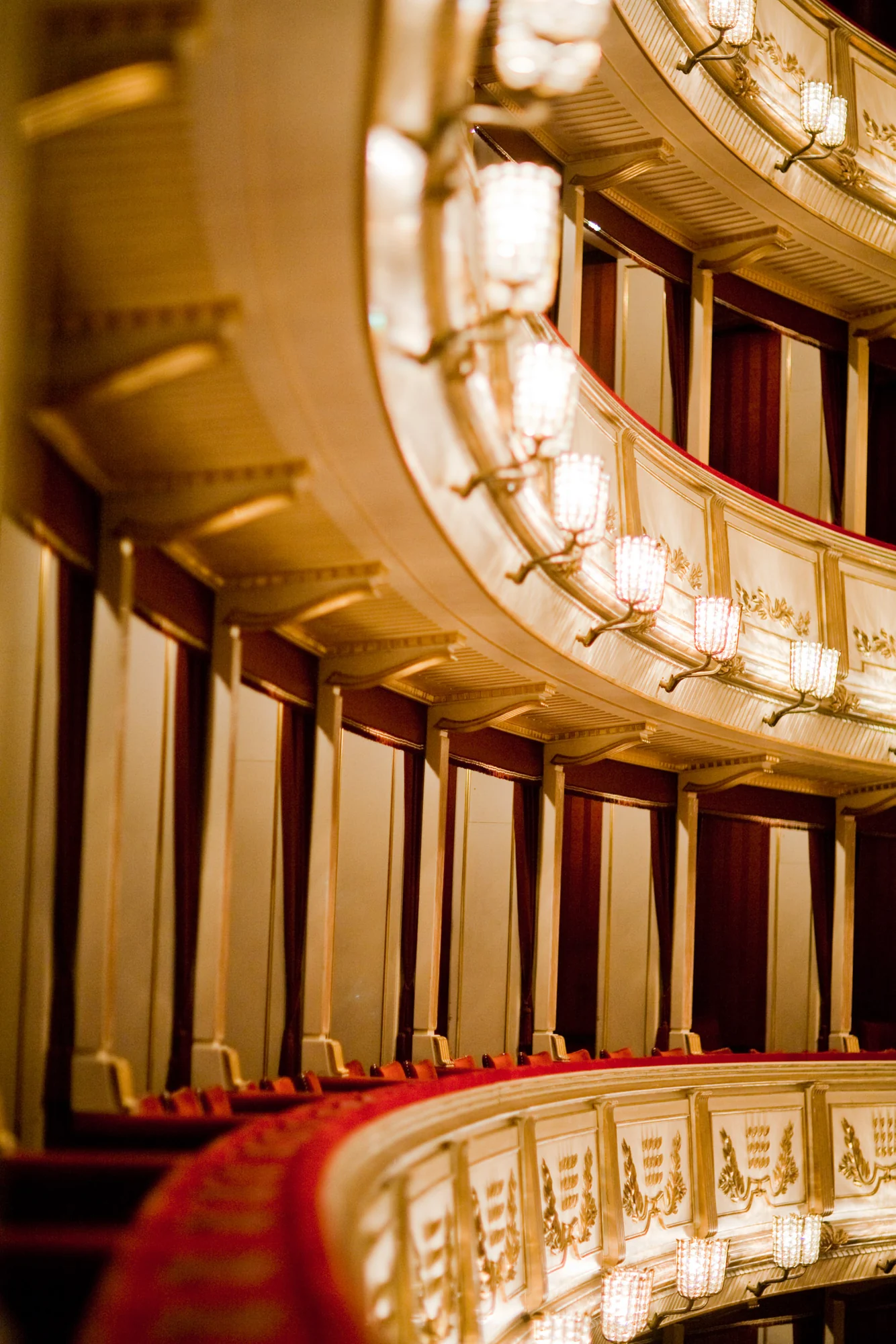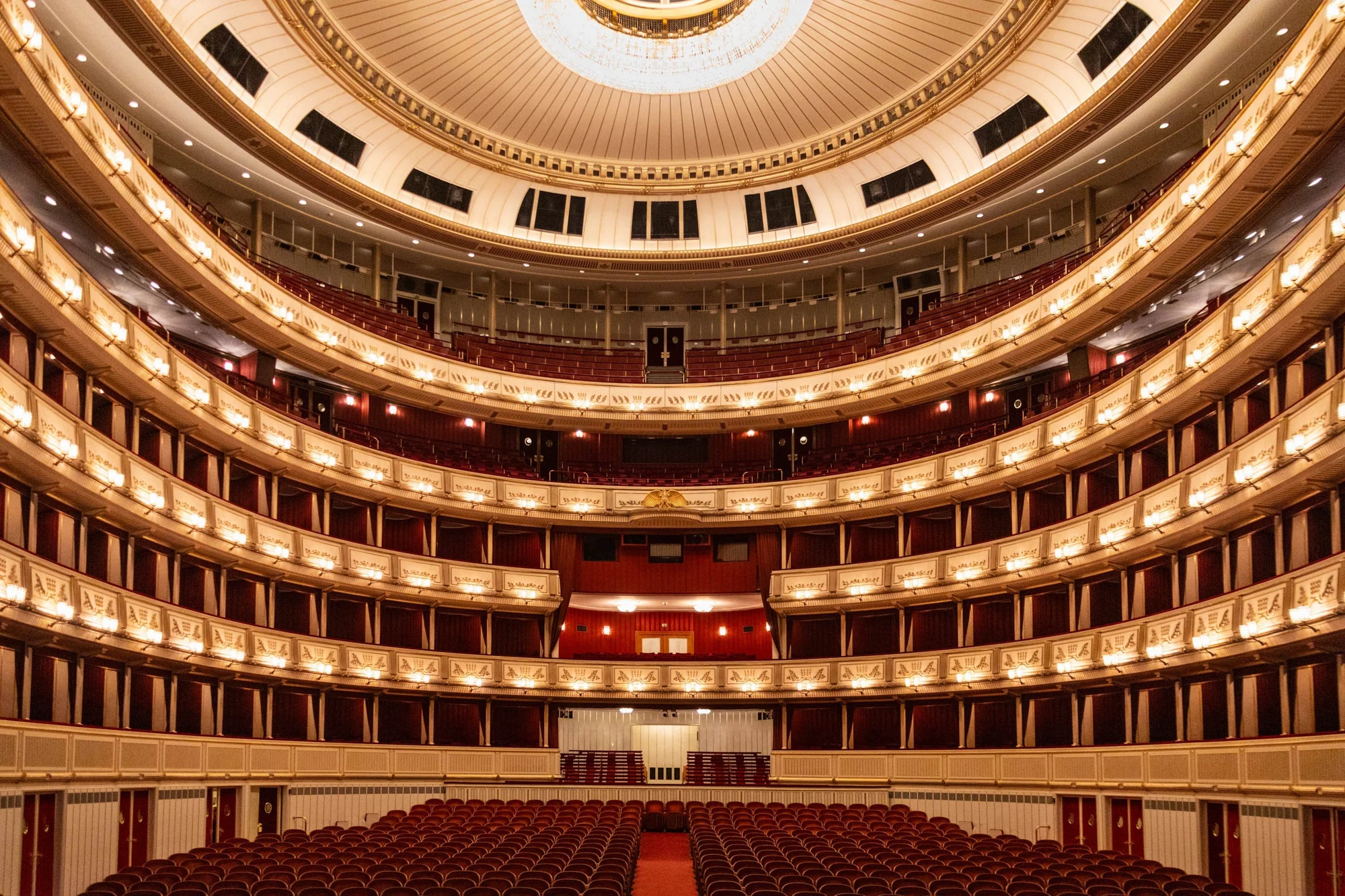
The circular auditorium with tiers of boxes around it, red seats facing the stage

Ringstrasse, Vienna, Austria

Vienna State OperaTiers of boxes curve round, the lights rise

The traffic noise of the Ring stops at the door; the square tiles of the foyer are worn bright and the chandelier glows overhead.

At the edge of Vienna's inner city, fronting the busy Ring road, with arched windows behind a stone façade.

PlaceRingstrasse, Vienna, Austria
TypeOpera house on the Ringstrasse
SuitsLovers of 19th-century interiors and anyone curious how the house was rebuilt

One building split in two

Ringstrasse, Vienna, Austria — Opera house on the Ringstrasse.

First, take in that curve.

The auditorium's tiers of boxes stack one over another, red seat-backs following the curve, the gold at the box edges layering upward. Looking up from the stalls, the balcony feels steeper than in photos, the lamps circling the ceiling. Empty, there is no music; footsteps fall muffled on the carpet, and you hear the scale of the house itself.

The string of rooms at the front is held tight, the vaults low, painting and lamps close together; push through a door and the auditorium suddenly opens, the height and the arc both take a breath. There is no sign explaining this; the floor changes underfoot and you notice it yourself. After the walk, what stays is how the building was put back together.
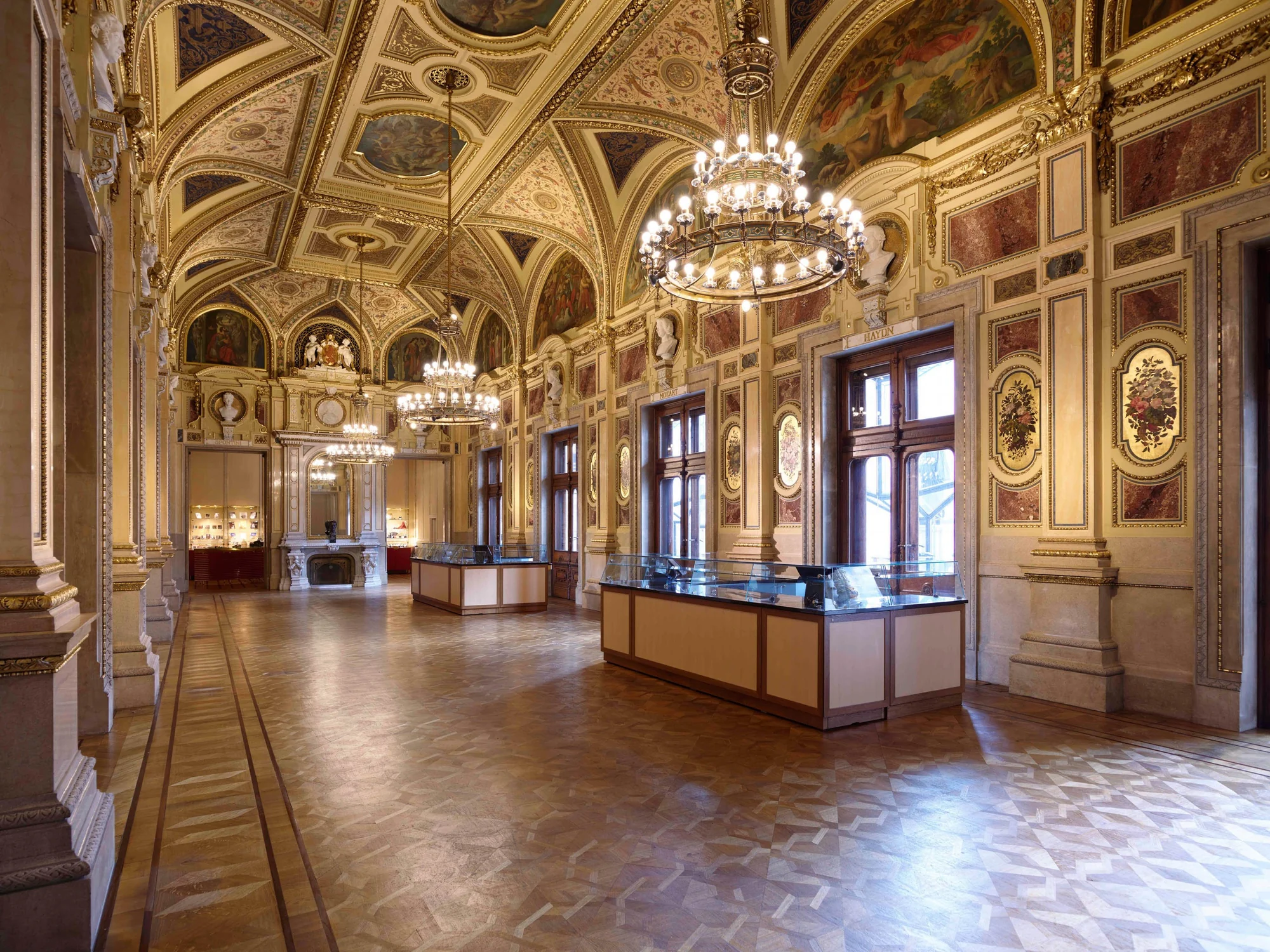
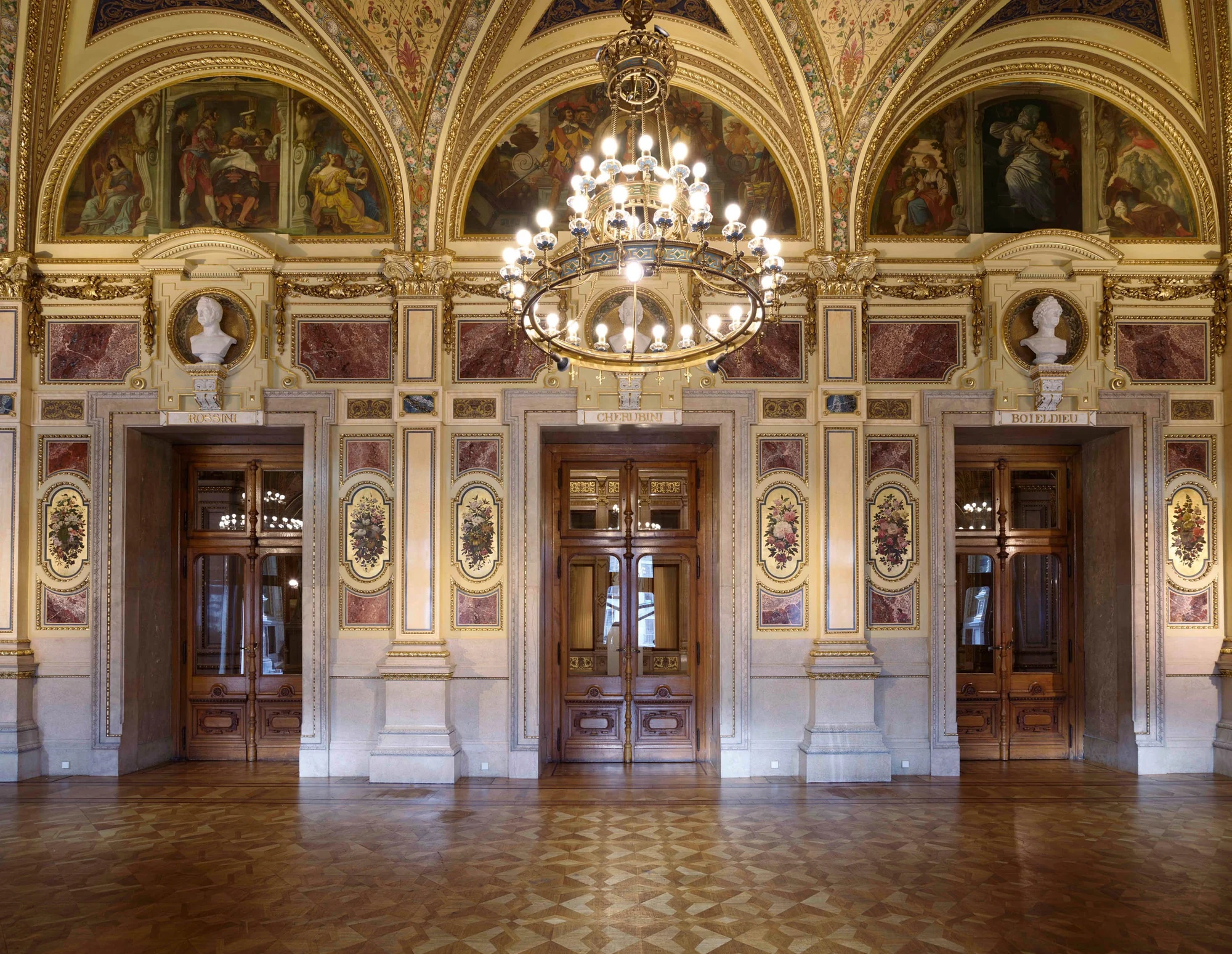
The gilded hall beneath the vault with display cases and a chandelier hanging from above
The gilded hall beneath the painted vault
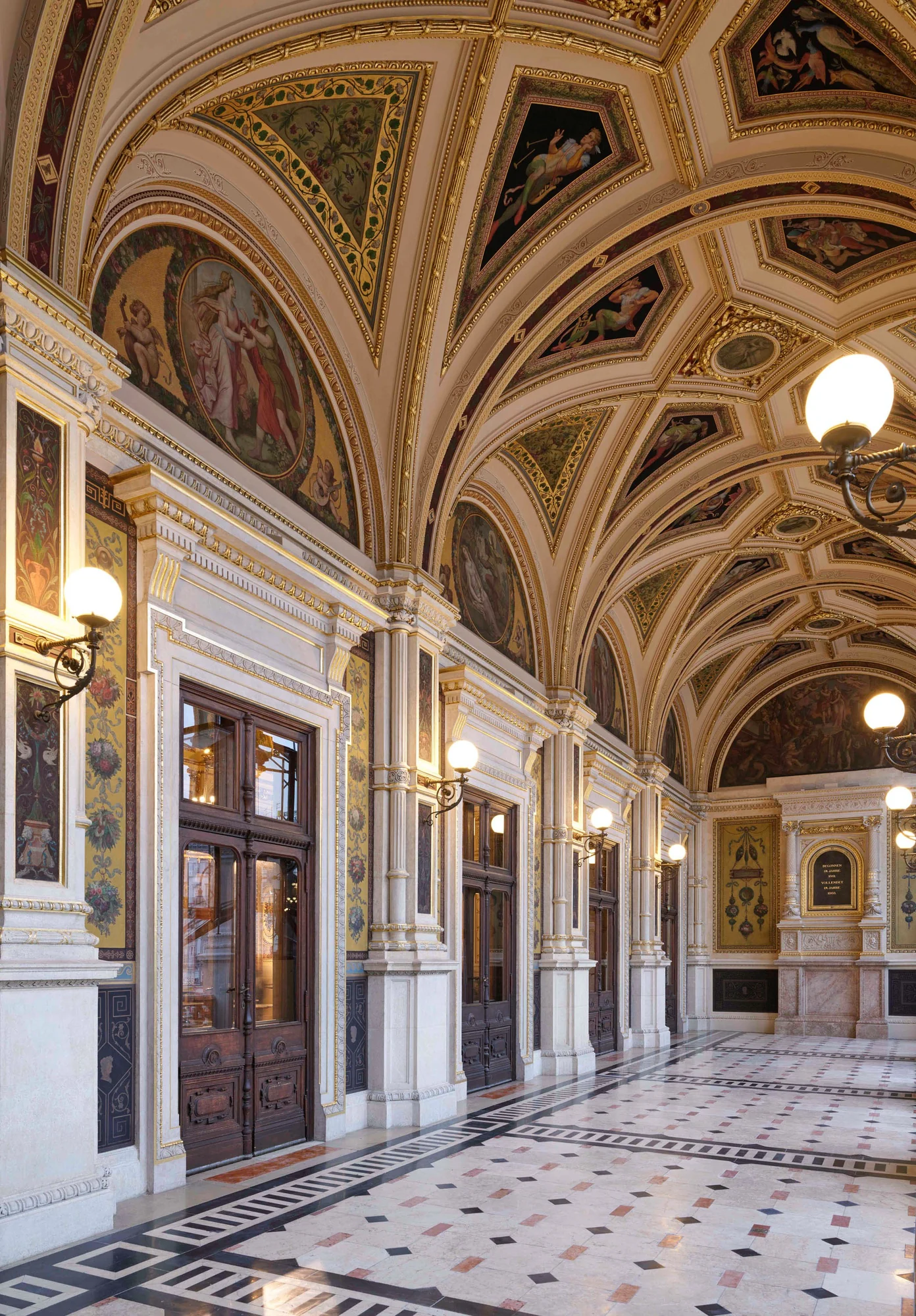
Arched doorways receding through a marble arcade, patterned tiles on the floor
The arched doorways receding down the marble arcade
A chandelier hanging between the painted vault and the doorways, round reliefs covering the walls

A foyer rebuilt after the war

The foyer and auditorium you walk into are post-war reconstructions: the building was badly damaged at the end of the war and reopened in 1955. The main staircase and foyer carry that reconstruction, not the 1869 original; standing here before curtain-up is part of reading the house.

The gold box rail curving along the arc, red velvet seats below

Standing room and boxes

The ring of seating holds boxes as well as standing places. Standing tickets are cheap and usually go on sale on the day, so people queue early; if you want to get in without paying for a seat, this is the practical route. Sightlines differ between seats and standing places, so check the position before booking.

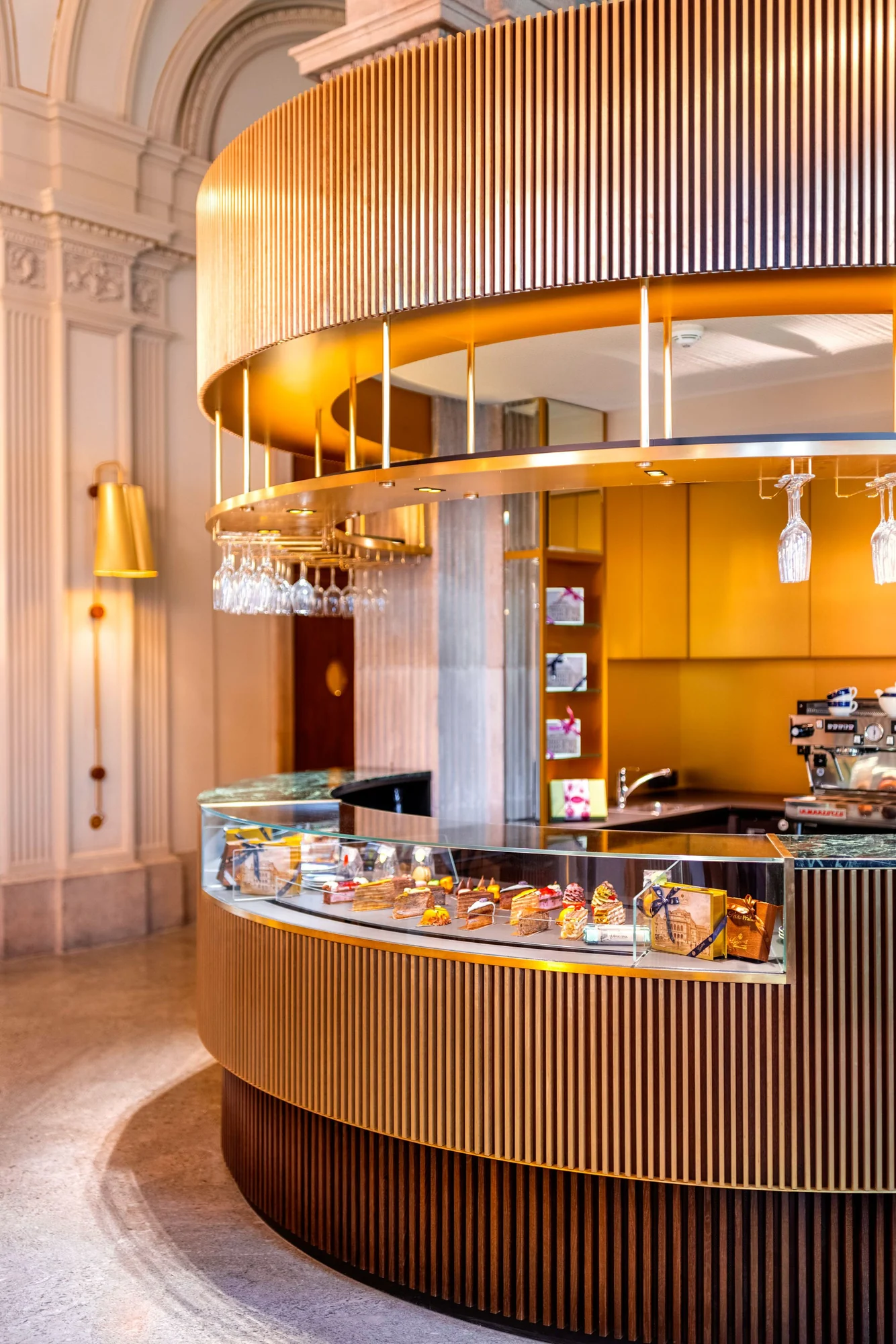
A wooden round counter in the intermission hall with small items under glass domes

Tours on non-performance days

On days without a performance there are often guided tours through the auditorium, the side of the stage and backstage areas, explaining how the house works. Performance schedules and tour times change, so check the official listing before you go.

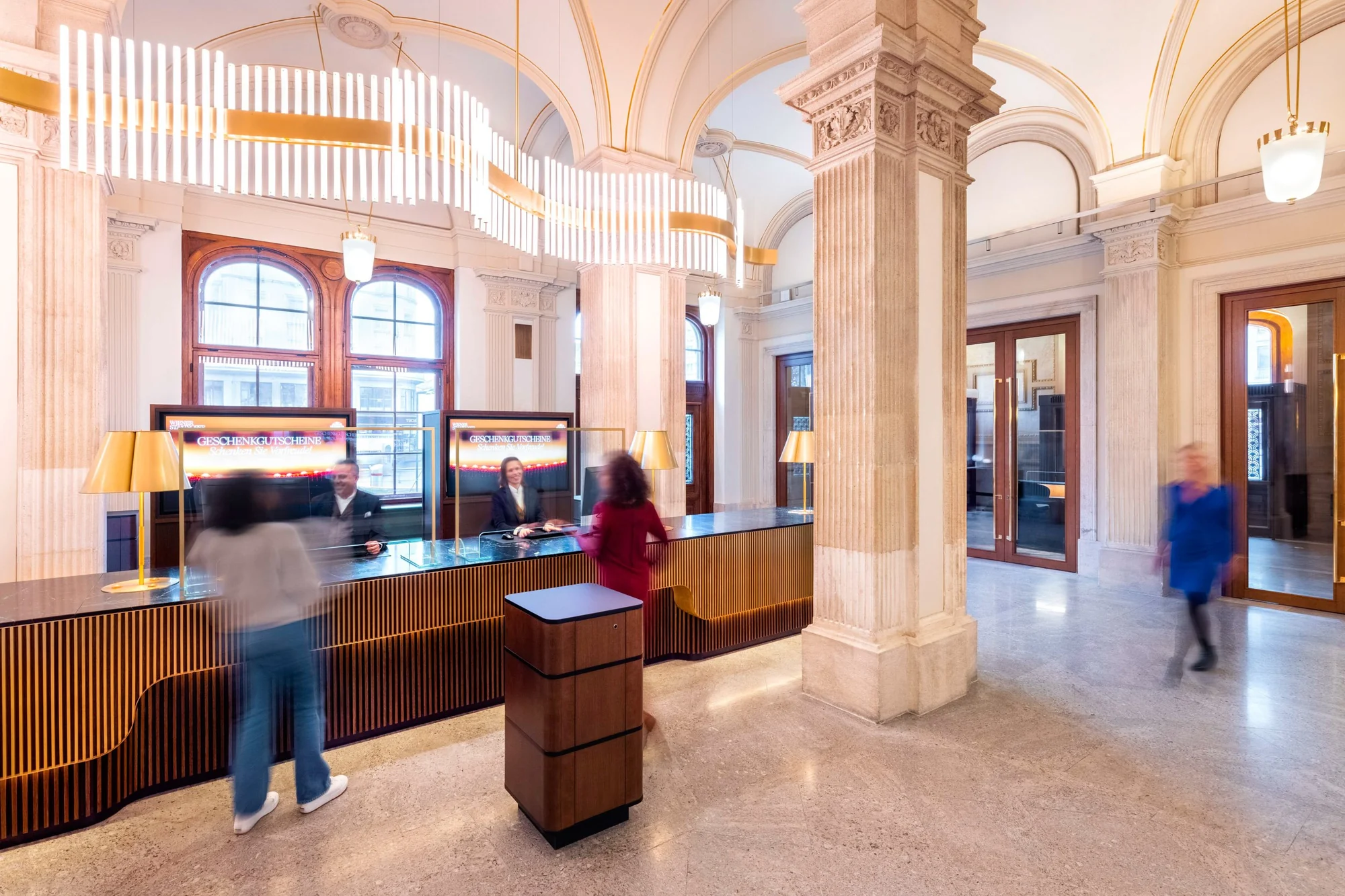
Tall windows along one side of the gallery, columns dividing the space
Route

A full day you leave for the inner city

Do not schedule it for your arrival day; stay a night in the city, see the rooms the next morning and return in the evening if there is a performance.

25 May 1869

The opening night staged Mozart's Don Giovanni. Work began in 1861 and finished in 1869, in the Neo-Renaissance style, to designs by August Sicard von Sicardsburg and Eduard van der Nüll, built by Josef Hlávka. It stands on the Ringstrasse, and Wikipedia notes it as the first major building on that road, before the rest of the street slowly filled in.

It opened as the Court Opera House, with Emperor Franz Joseph and Empress Elisabeth at the premiere. Only after the empire ended and the republic formed did the name change to the one used today. The name changed, but the building is the same; the emblem in the foyer and the later plaque do not mean quite the same thing.

The auditorium today has 1,709 seats plus 567 standing places. These figures describe the present; the capacity was altered in the postwar rebuild, and the stalls and balcony structures were both changed, though the shape of the box ring in old photos has survived.

The fire of 1945

Near the end of the war, a bombing on 12 March 1945 set the house alight. The auditorium, the stage and the sets and props for over two hundred productions — some 150,000 costumes — burned. The fire started at the back, and the audience half of the building was left with almost nothing usable.

A wall had been built earlier to seal off the front, and so the foyer, main staircase, vestibule and tea room were saved, along with Moritz von Schwind's murals in the foyer. These spaces still lead on toward the back today; the tile floors and vaults are nineteenth-century, held tighter in scale than the hall behind.

Reopening took ten years. On 5 November 1955, after the Austrian State Treaty was signed, the opera house reopened with Beethoven's Fidelio, conducted by Karl Böhm. The new auditorium then held about 2,276; the stalls seats were reduced and the four balcony tiers restructured to stand without columns.

More than three hundred performances a year

The house runs a repertory system: fifty to sixty operas and ten ballets a year, more than 350 performances in total. Almost every day of the week brings a different work, and one set of scenery must house several productions, so backstage the rhythm is quite unlike what the audience sees. What plays on any given day is down to the current schedule.

In carnival season the auditorium is cleared for the Vienna Opera Ball, the stalls floored over while the boxes still glow tier on tier. The house is a place of performance day to day, but those nights it is used another way, the relation between stalls and stage temporarily remade.

The gallery's row of tall windows is the most pleasant stretch to stroll, light coming from the side as columns divide the space into bays. After the performance, with fewer people, you can hear footsteps on the floor — this stretch is best saved for last.

Fitting the opera house into a half-day in the inner city

The Ring runs right past the door and walkable streets continue on both sides; the rooms themselves do not take a full day.

Dates

Check current notices for performances and access; the program changes almost nightly, so do not treat any one evening's bill as the norm.

Duration

The sequence of rooms takes one to two hours; add time before and after if you catch an evening performance.

Season

The season and the ball season each have their schedules; the ball falls on the last Thursday of carnival. Check current notices for which you want.

Talk through my trip idea

If you are planning your inner-city days, tell me how many nights you will stay and whether you would like to catch a performance.

1stlandinglink@gmail.com

Read this page in Chinese

Discuss this journey