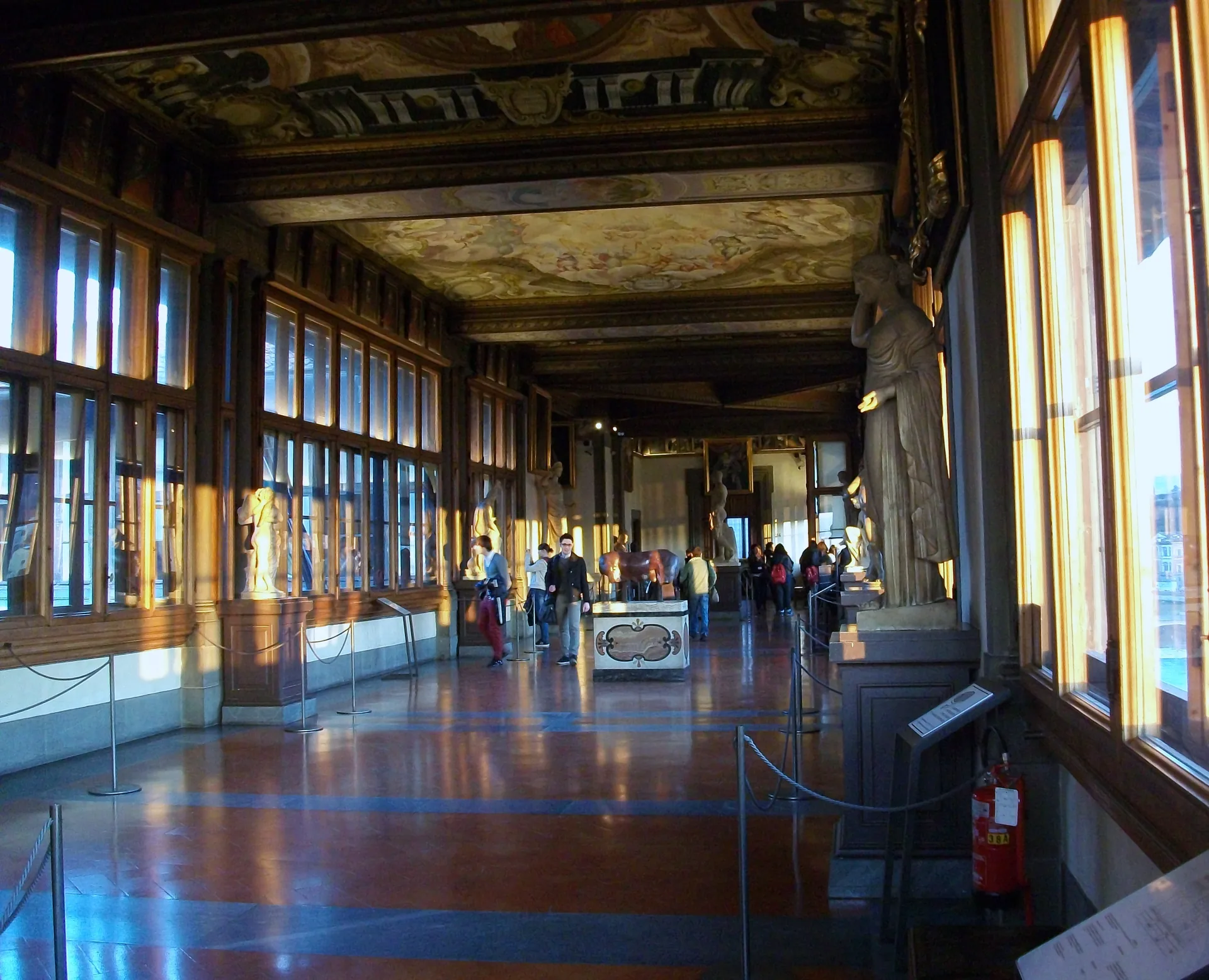
A long gallery corridor hung with paintings on both walls, a lit window at the far end, light reflected on the wooden floor

Florence, Italy

Uffizi GalleriesA long corridor hung with paintings, ending in window light

Opened to the public only in 1769: for two hundred years before that it was the Medici office building first, a gallery second.

In the old centre of Florence, beside the Piazza della Signoria, between two wings that close a narrow yard facing the river.

PlaceFlorence, Italy
TypePainting galleries
SuitsRenaissance painting
PlanHalf a day

A chain of rooms, one by one

Florence, Italy — Painting galleries.

Start by walking the corridor.

The rooms follow one after another, hung densely; some hold a single sculpture, others are full on every wall. The ceilings keep their old painting and mouldings, windows open along one side and the light comes in at an angle. Move fast and you miss the small ones beside the door frames.

The Uffizi's draw is the paintings themselves: Botticelli, Leonardo, Michelangelo and Raphael sit in rooms along one corridor, ordered by date. Vasari designed the building as a run of rooms meant to be seen in sequence, so following it reads the arc of Renaissance painting without a choice at every door.
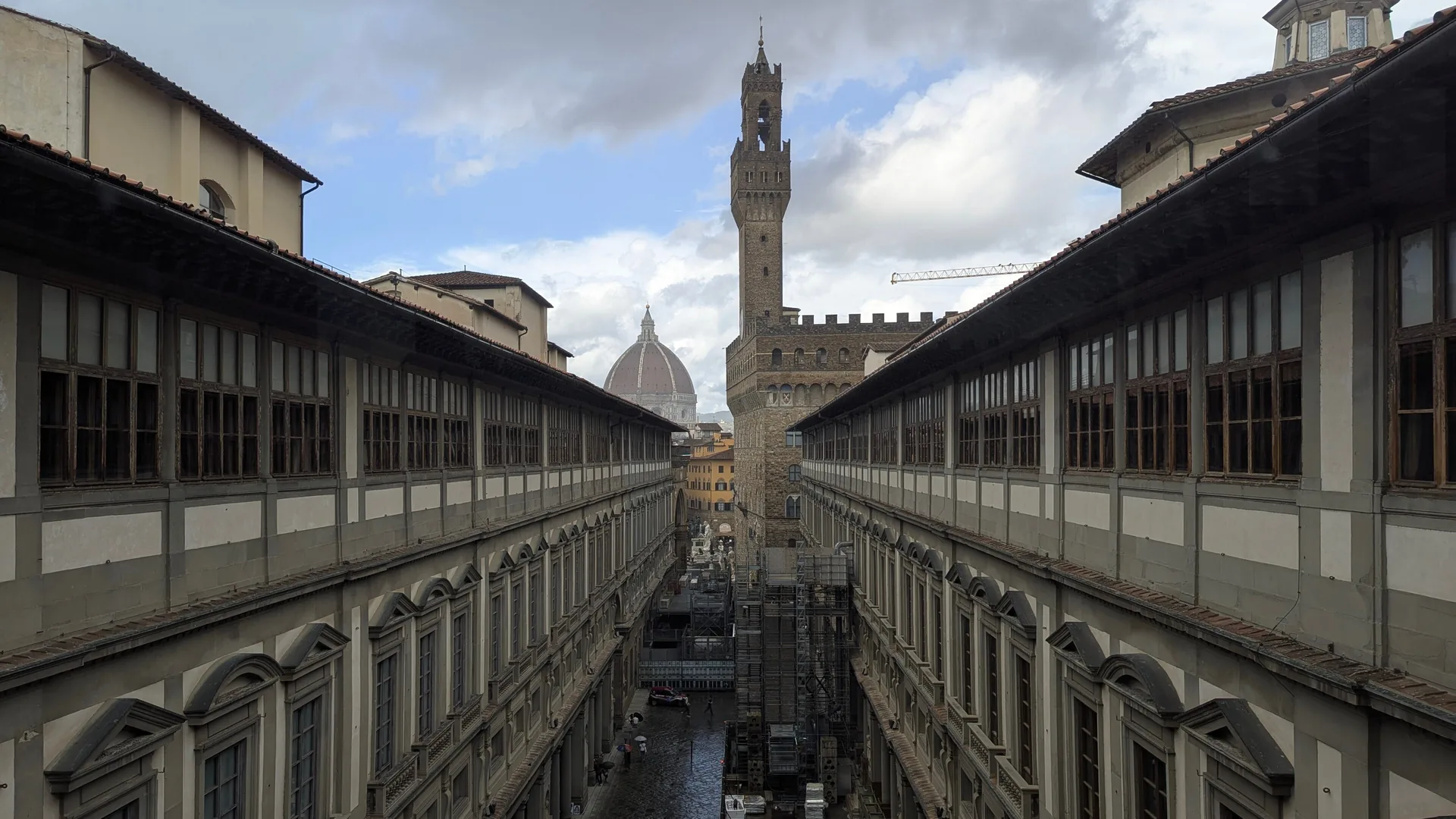
Looking down between the two long wings of the Uffizi, the narrow court running to a bell tower
The narrow court between the two wings
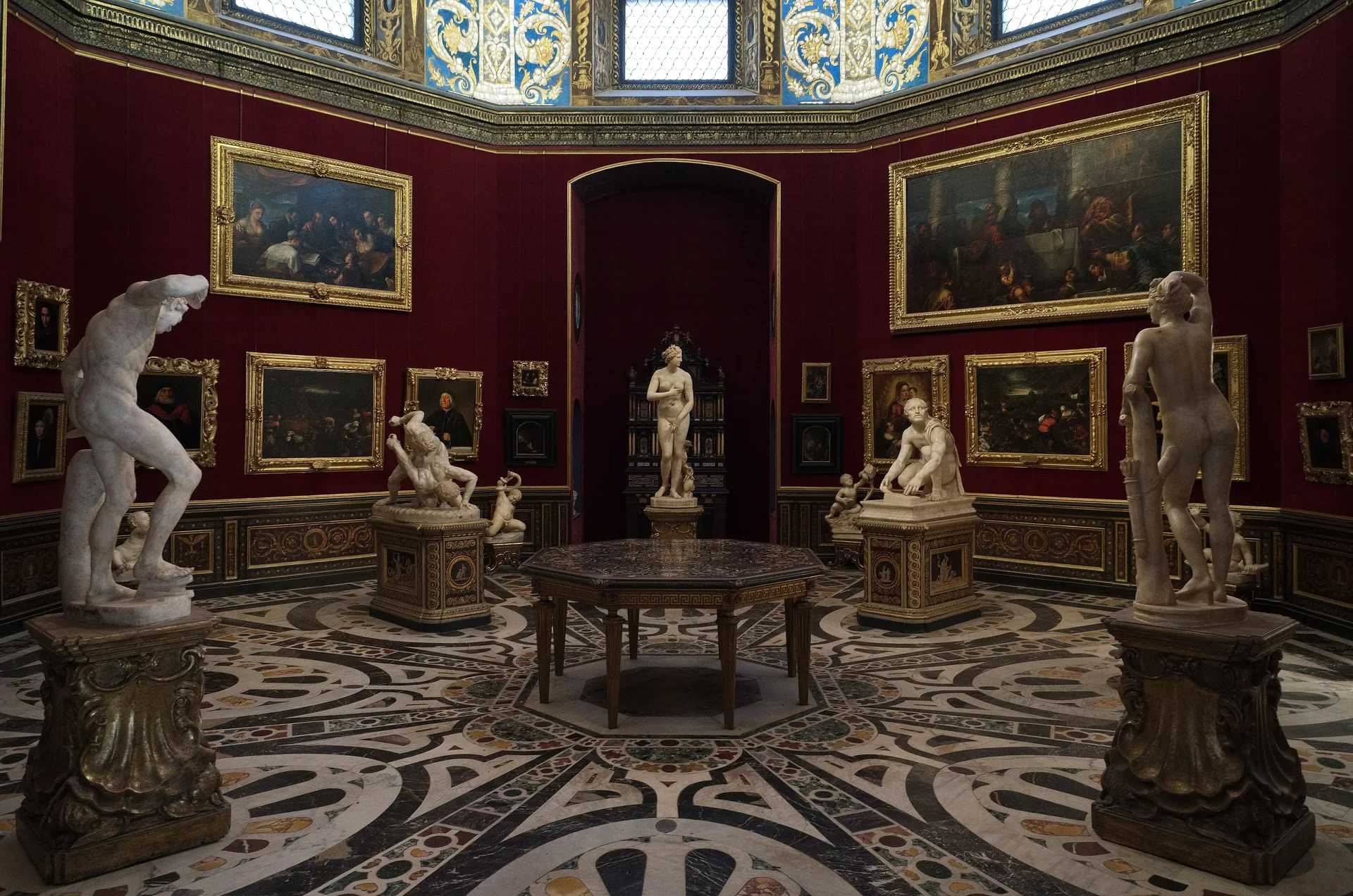
The octagonal Tribuna: red walls, a domed ceiling, marble floor, sculptures on pedestals
The Tribuna, eight-sided
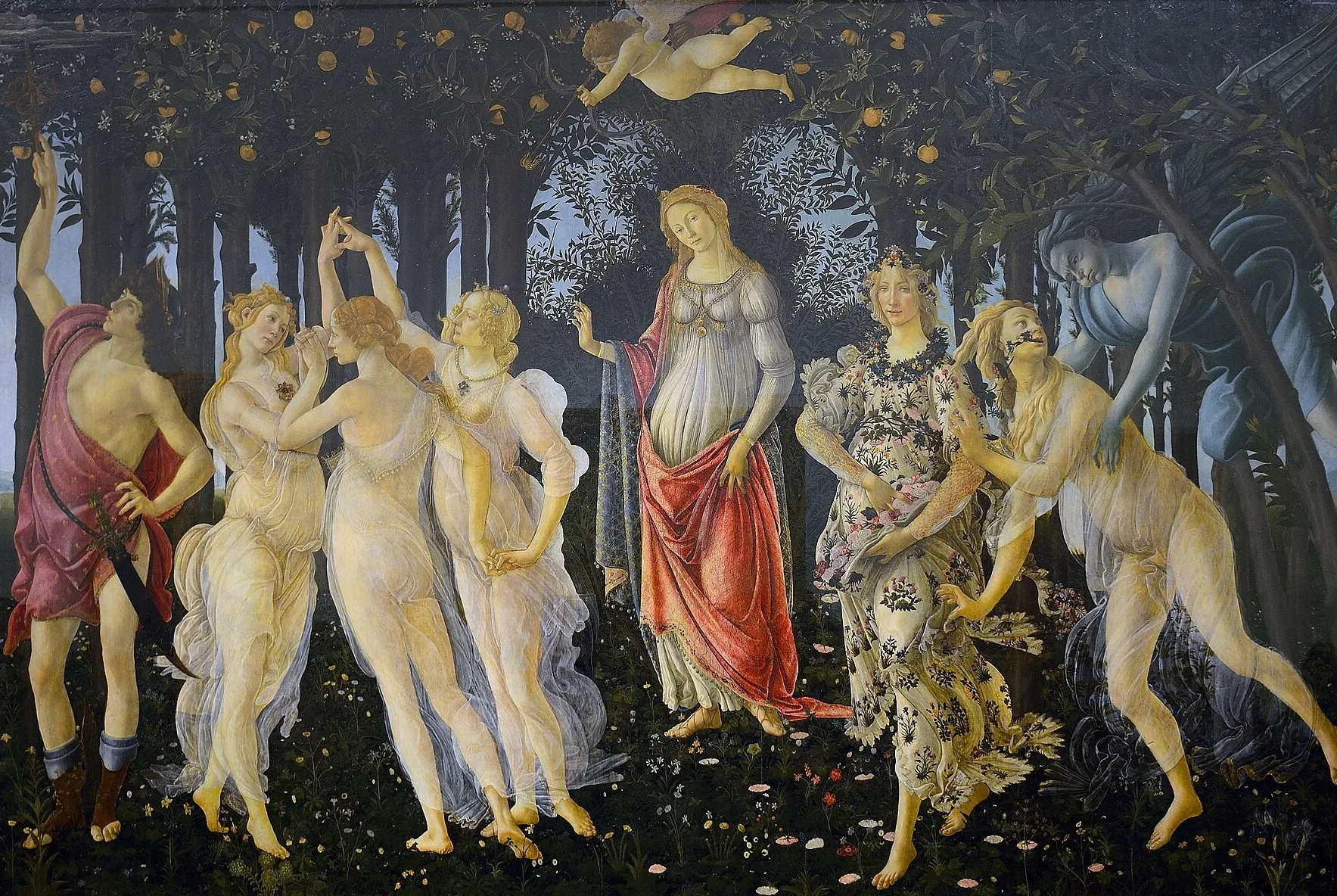
Botticelli's Primavera: a ring of figures in an orange grove, a woman in a red robe at the centre

Botticelli's Venus and Primavera

The Uffizi is built around Italian Renaissance painting. Botticelli's Birth of Venus and Primavera anchor one room, and the sequence of Florentine altarpieces and portraits carries you chronologically from the 13th century onward.

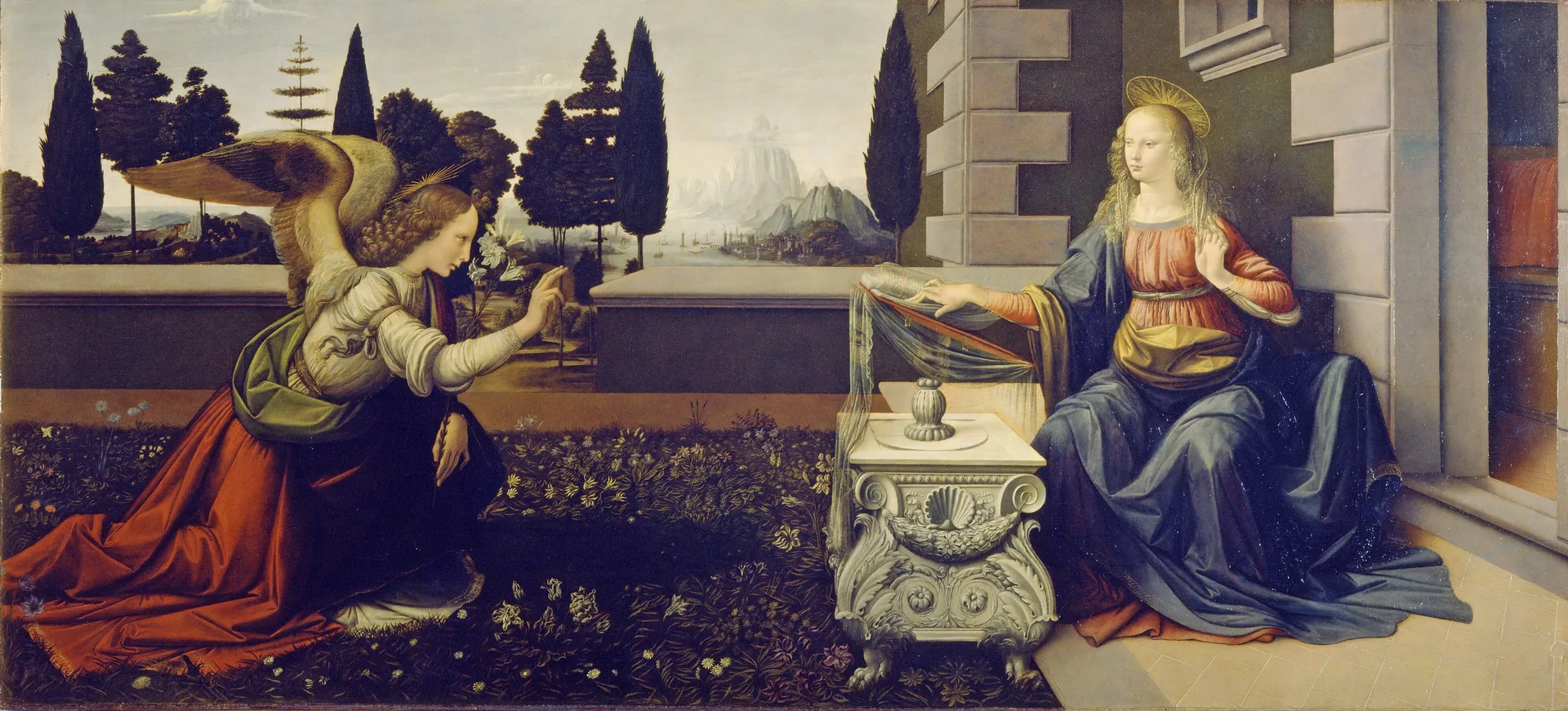
Leonardo's Annunciation: the angel and the Virgin at either side of a walled garden

Leonardo, Michelangelo and Raphael

Beyond the Botticelli rooms the galleries hold Leonardo, Michelangelo and Raphael, then Caravaggio and the later Venetians. The windows face the Arno and the end of the corridor opens onto it; 'uffizi' means offices, and the building began as the Medici's administrative offices, with their own collection given the best rooms.

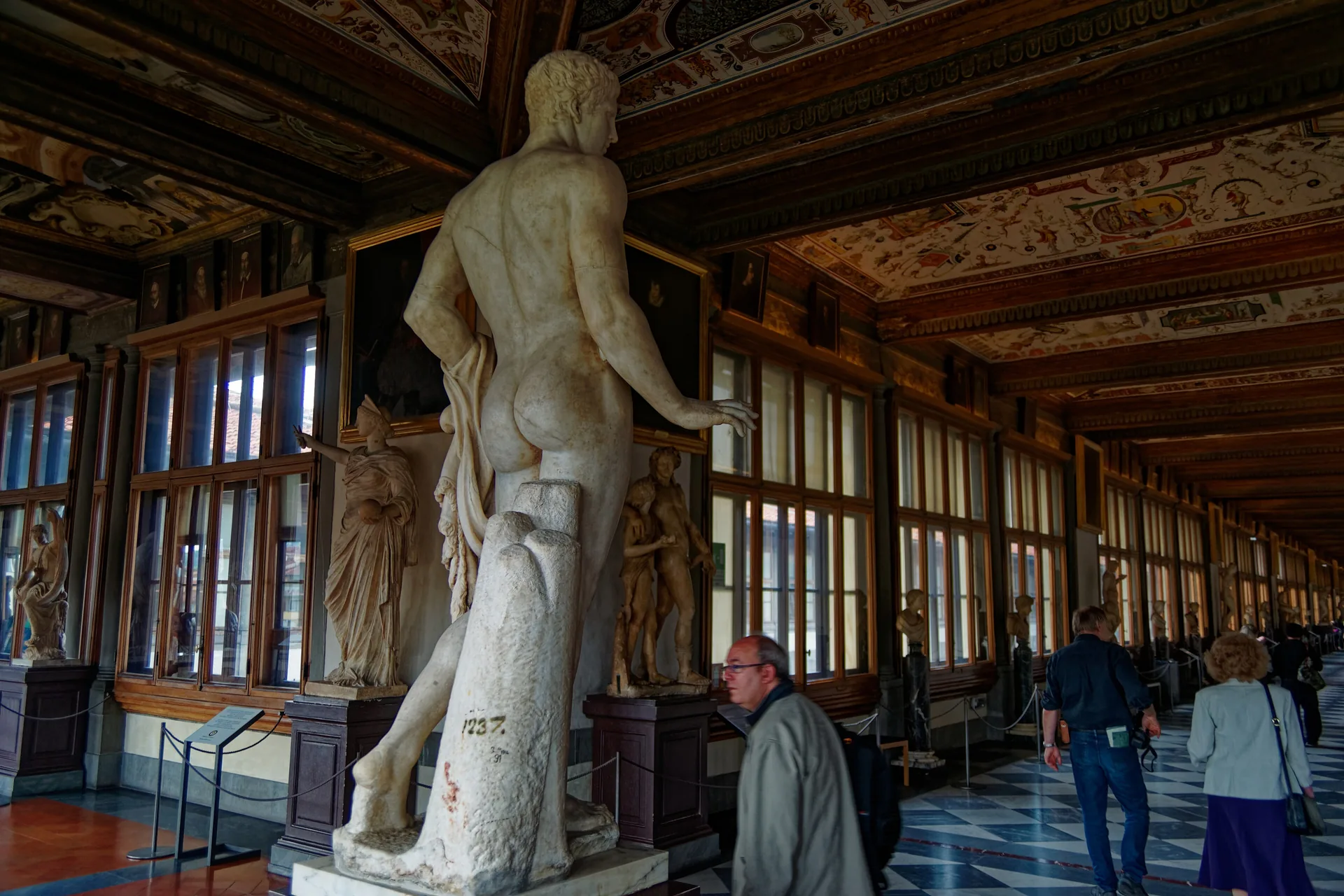
Antique statues standing along the corridor wall, visitors walking between them

Vasari's route through the rooms

The collection is paintings first, but the sculpture corridors and the self-portrait collection give the walk its rhythm; Vasari designed the building as a set of rooms meant to be seen in order, so the route is largely set for you rather than a choice at every door.

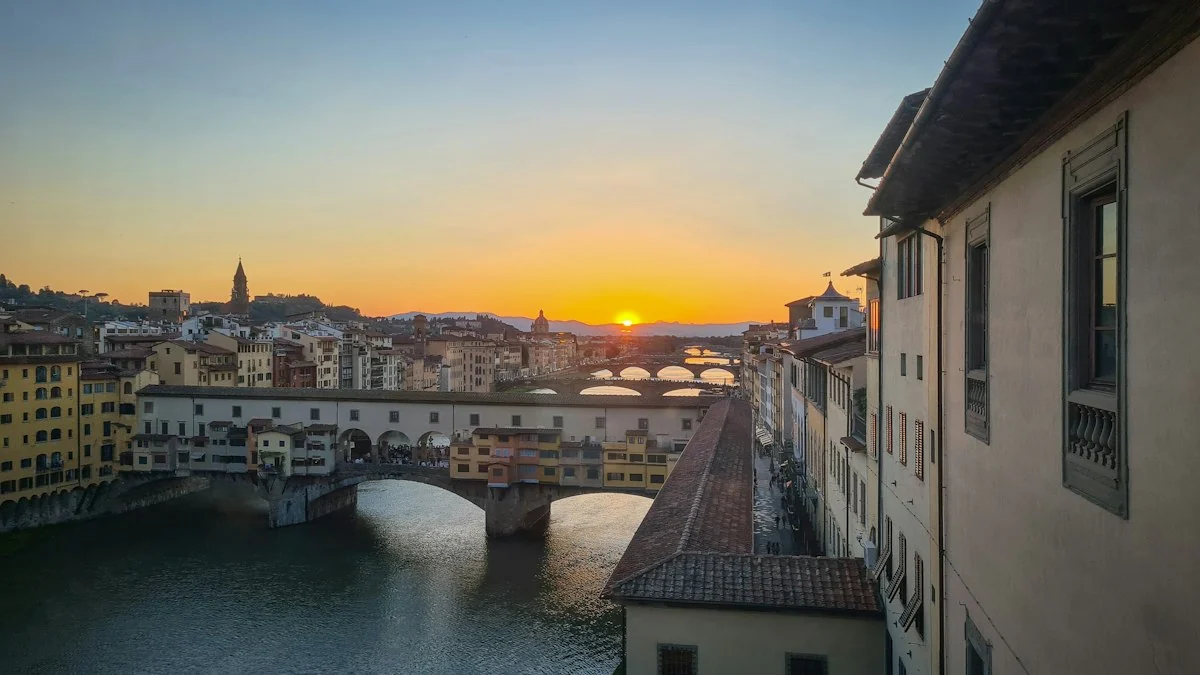
Old bridge over river
Route

A full day for Florence

Do not set it on arrival day; stay a night in Florence first, enter the museum the next morning, and walk back along the river at dusk.

A day that does not slip away

The Uffizi is long; the rooms are the point, not a checklist.

Before you go

Book a timed slot; the corridor is dense.

Pace

Let the wall colours lead room to room.

After

The Ponte Vecchio is steps away.

Plan this into a Florence stay

Tell us the days in Florence and we can talk through how a day at the Uffizi fits with the rest of the city.

1stlandinglink@gmail.com

Read this page in Chinese

Discuss this journey