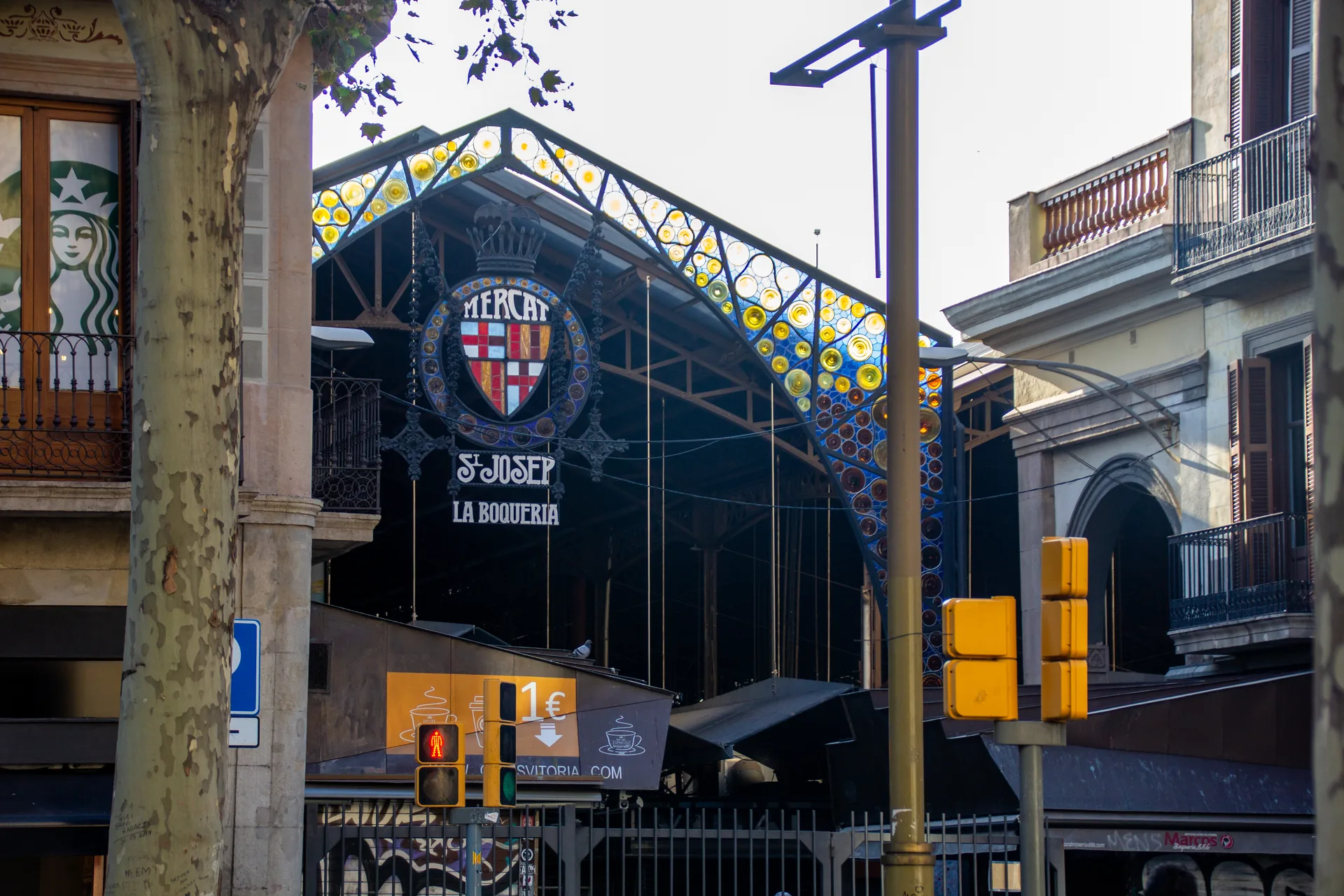
The iron and glass entrance front of the market with a central MERCAT DE SANT JOSEP LA BOQUERIA crest, a street and buildings to the left

Barcelona, Spain

La BoqueriaOne iron hall, stalls between the columns

The market grew on the site of a burned convent; the iron roof over it arrived in the twentieth century.

At 91 La Rambla, where the old city meets the Raval.

PlaceBarcelona, Spain
TypeCovered food market
EntryFree, no booking

One market, three layers of time

Barcelona, Spain — Produce market.

Under the floor is the old convent of Sant Josep. After the fire of 1835 the site passed to the city, and the market was formally established on it, which is why the place is also called Mercat de Sant Josep.

Work began in 1840 to a design by the municipal architect Josep Mas: a tall, modern building in iron. The plans were revised repeatedly, the structure was inaugurated in 1853, and the roof that is seen today was completed in 1916.

Inside, the stalls are grouped by trade: fruit and vegetables, fish and seafood, meat and cured goods, dried fruit and preserves, ham, and a handful of small restaurants. One lap gives a working picture of what Catalonia grows and catches.
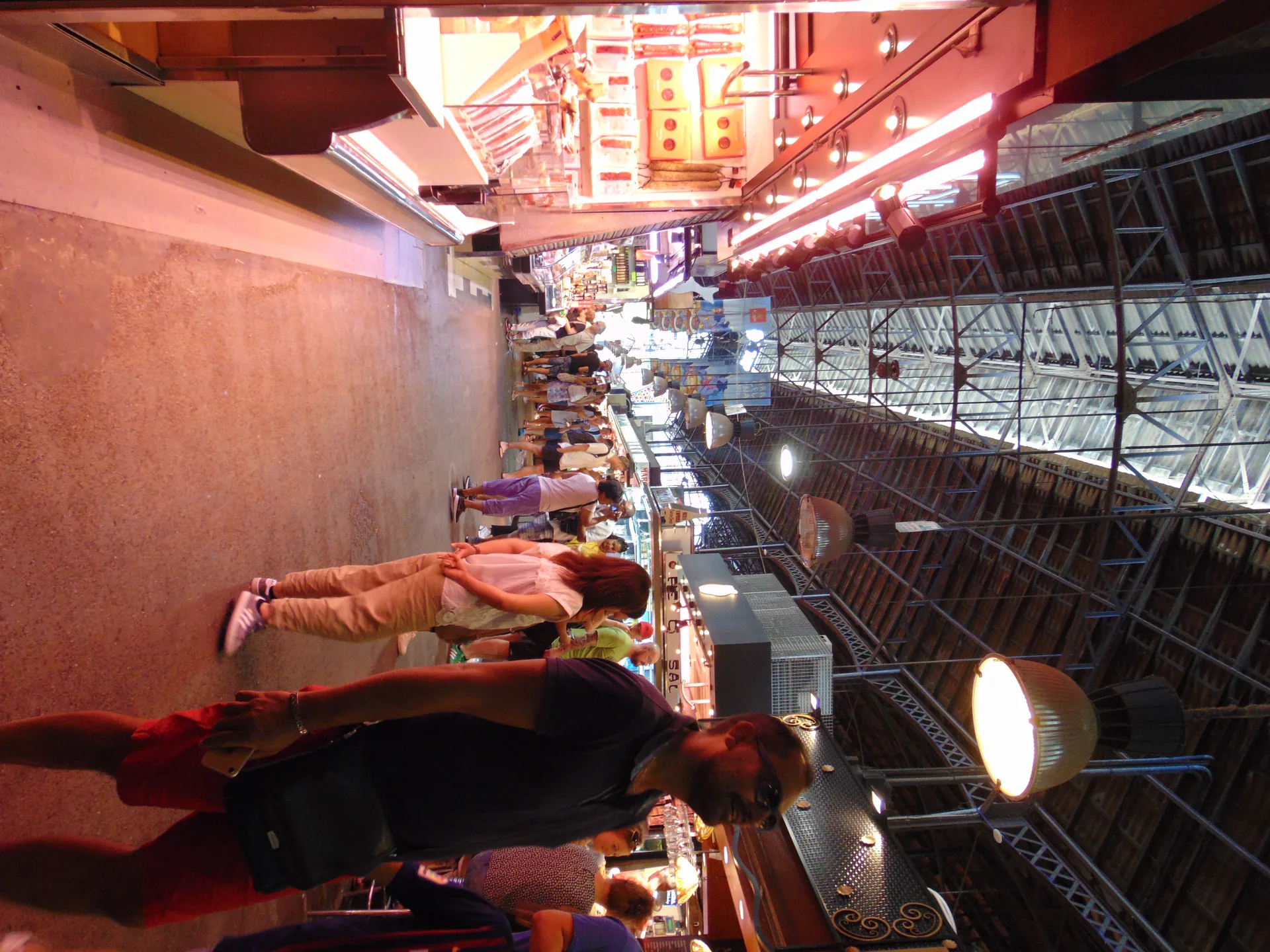
An aisle inside the market under an iron and glass roof, red neon reflecting on the glass, people walking through
Red light in the aisle
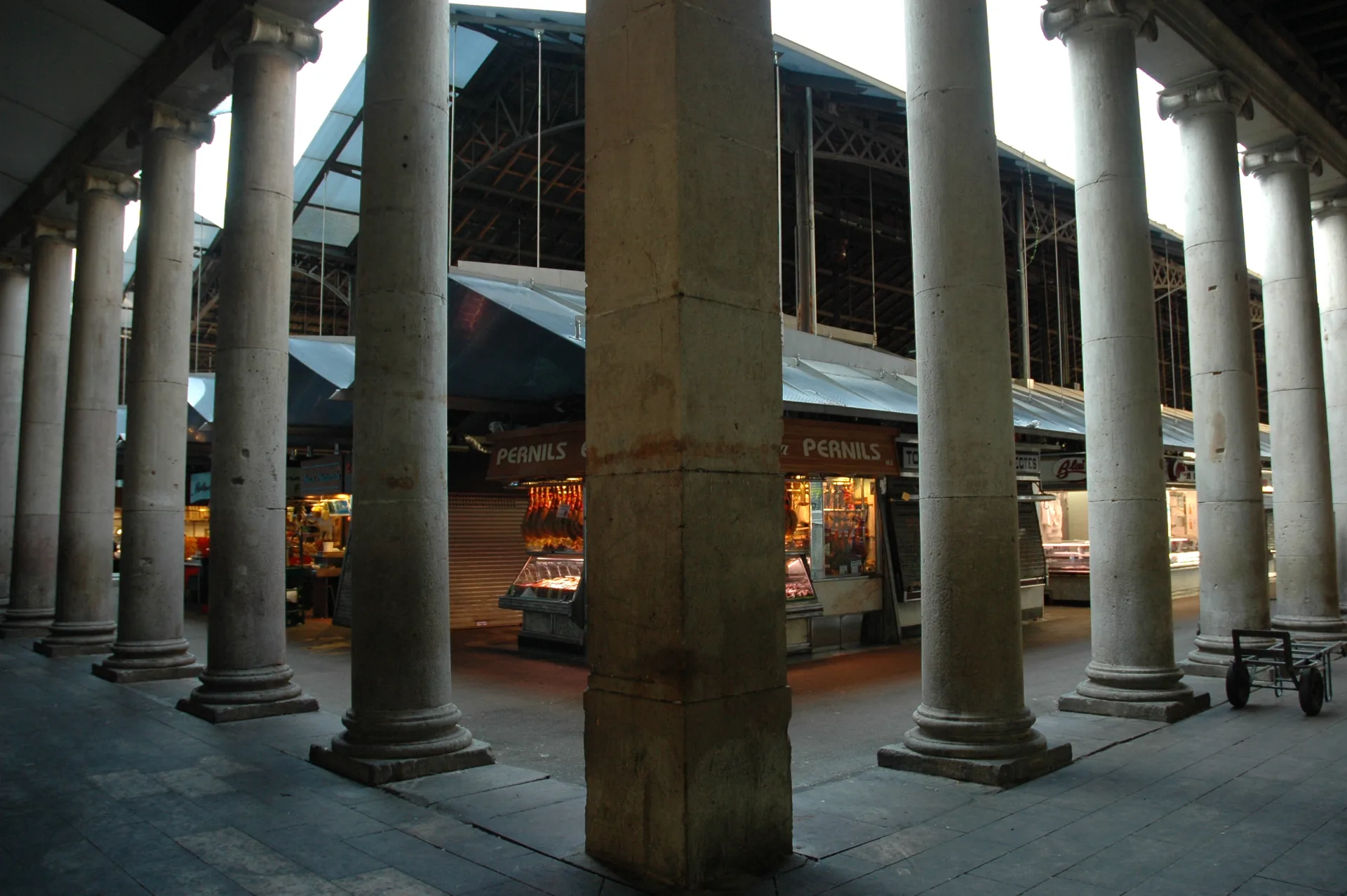
A row of stone columns along the outside of the hall with market stalls visible between them
Columns along the flank
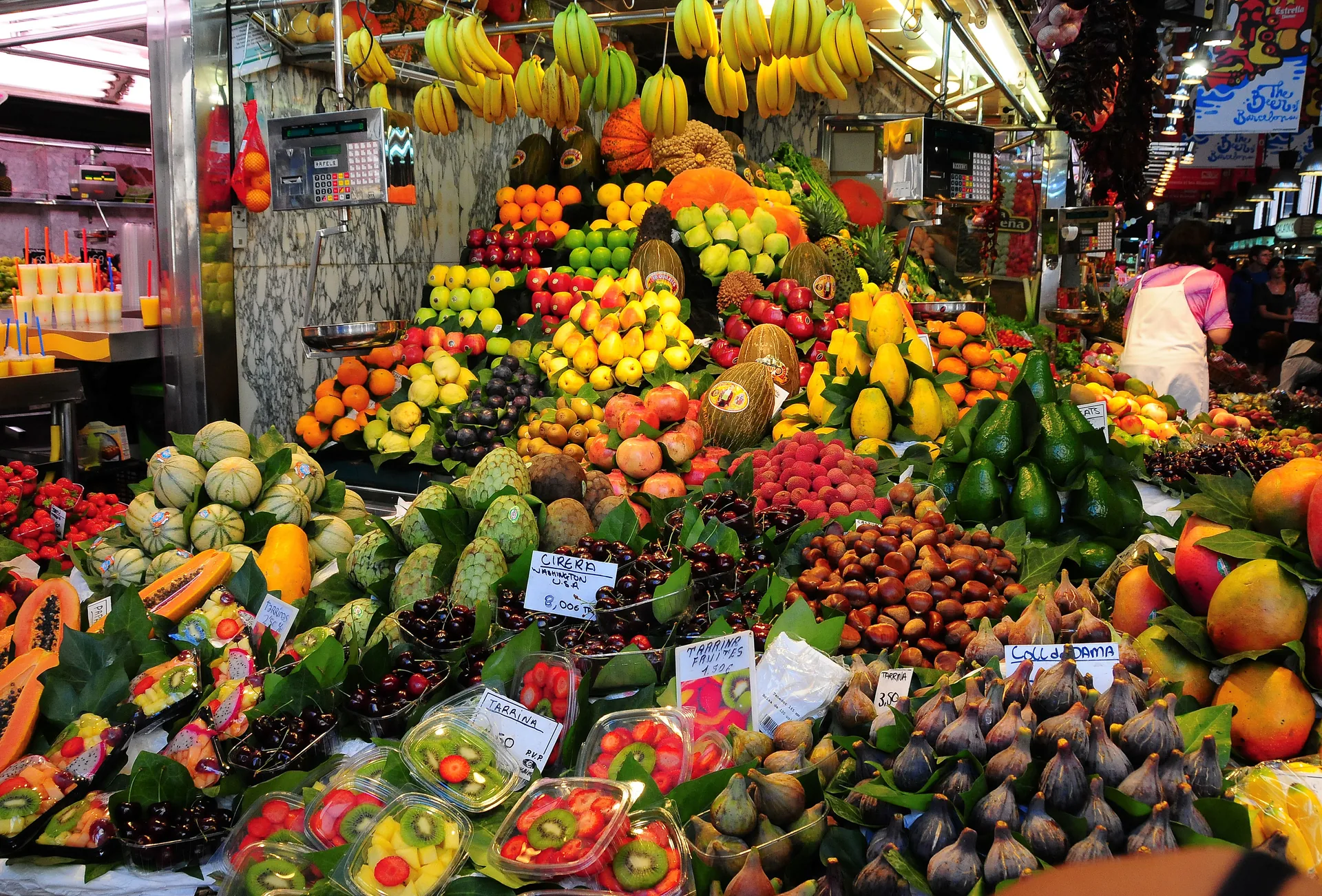
Fruit piled in wooden crates, mangoes, dragon fruit and citrus stacked in layers

Goods stacked in cones

Fruit stalls build their stock into cones, mangoes and dragon fruit and kiwi pressing down on each other, handwritten cards pushed into the edge of the crates. The trader stands behind the pile, hands moving.

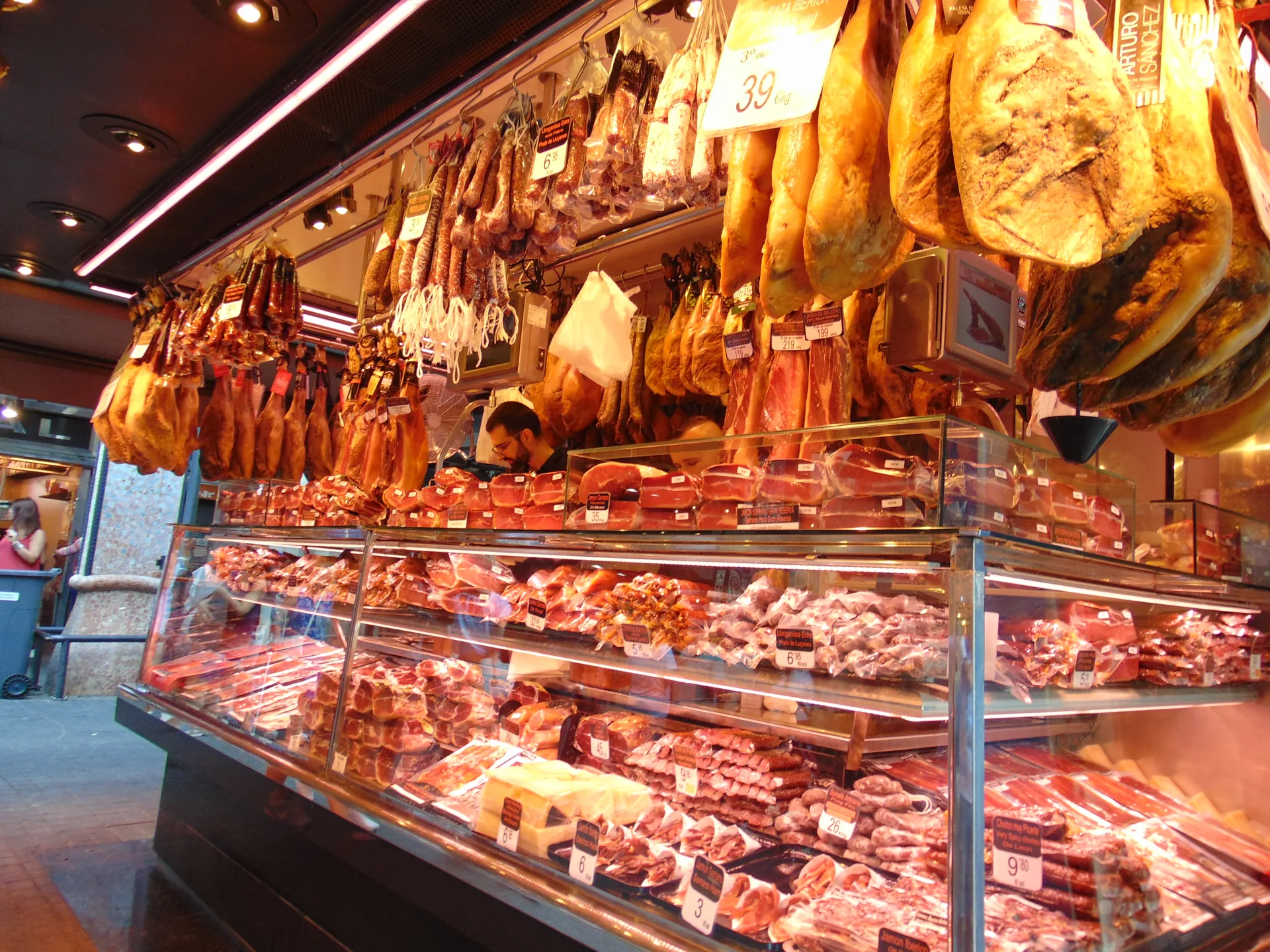
Whole hams hanging above a cured-meat stall, sliced meat and sausage behind glass below, lit warmly

Ham above the counter

Above the cured-meat stalls whole hams hang in rows, tails down, one beside the next. Underneath, behind glass, the sliced meat and sausage sit in a warm light.

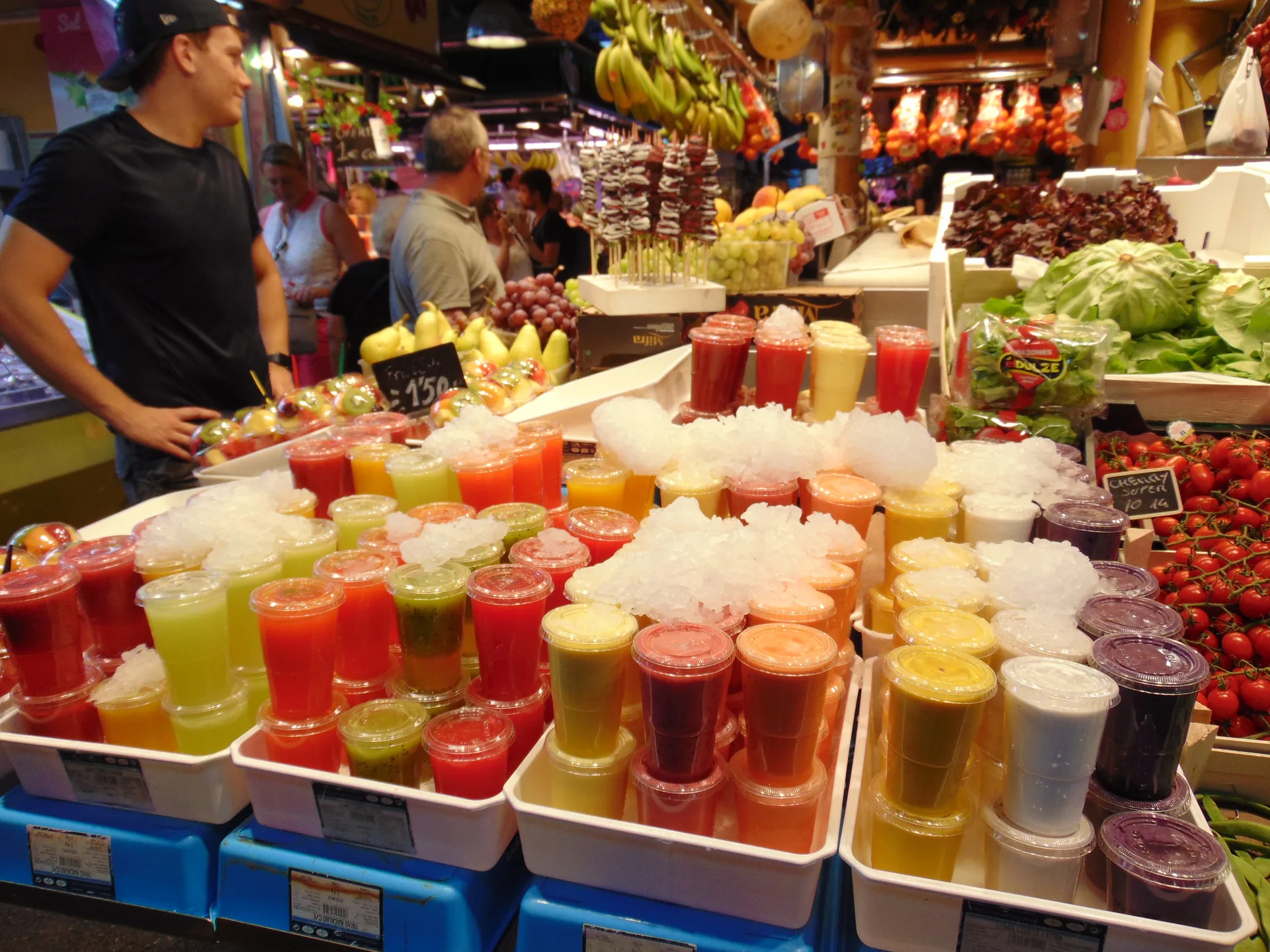
Plastic cups of juice in red, yellow and green standing in rows at a stall, ice at the front

A cup of juice

Several stalls fill plastic cups with juice and stand them in a row, red and yellow and green, ice added at the front. Drink one standing, then walk on.

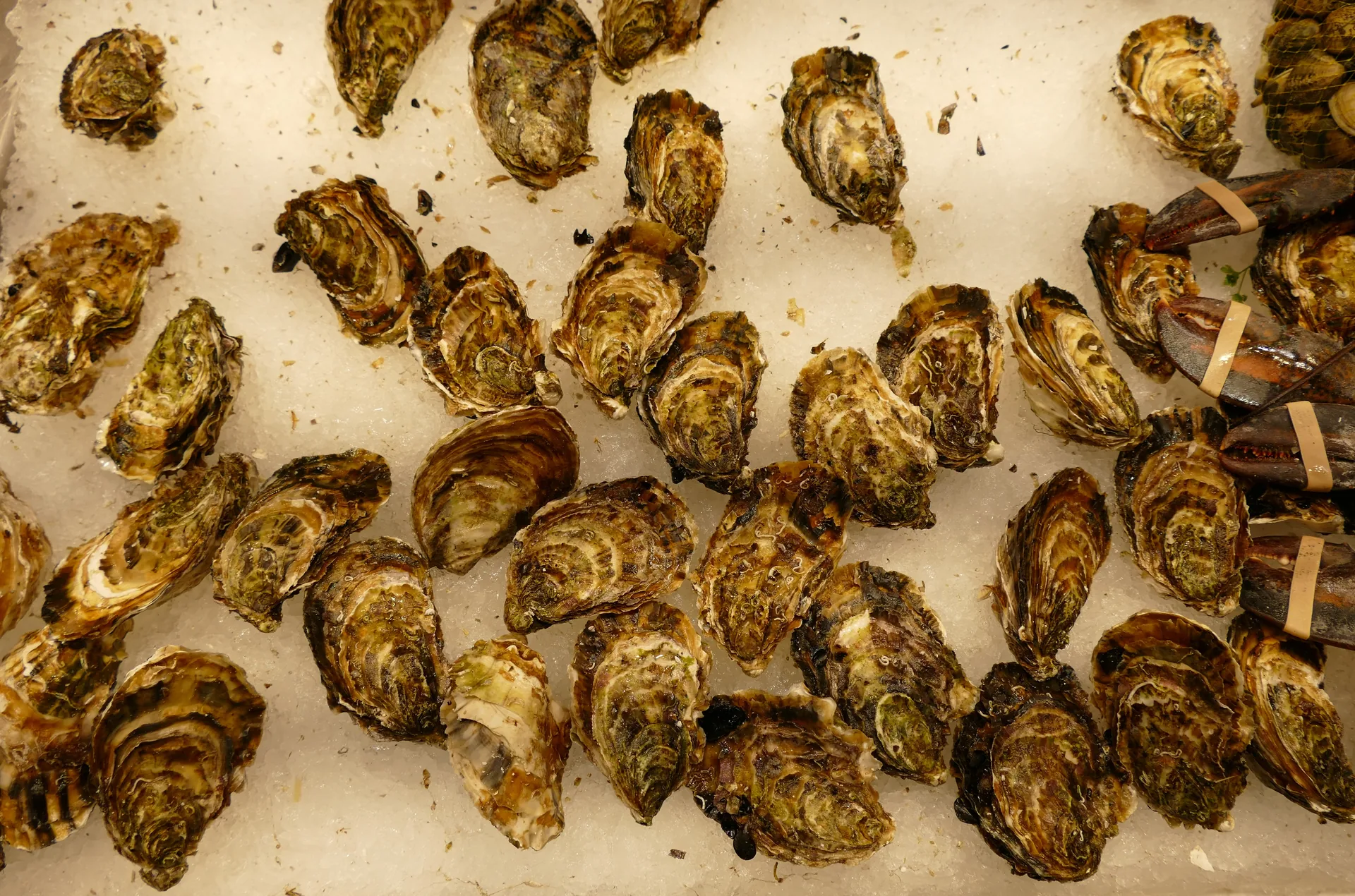
A tray of oysters laid on ice, shells facing up, a small knife alongside
Route

Step off La Rambla

The main entrance is on La Rambla, a step from Liceu on metro line 3; the Raval side opens onto Plaça de la Gardunya.

It began on a convent's ground

The first written record of trade on this spot is from 1217, when tables were set up near the old city gate to sell meat. Over the centuries the name changed: Mercadi Bornet, then Mercat de la Palla, the straw market, until 1794.

The market won legal recognition in 1826, and a meeting in 1835 decided to build a proper structure. That summer the convent was burned in the riots known as the Burning of the Convents, the land passed to the city council, and the market settled onto the cleared ground.

Then the iron went up

Construction started on 19 March 1840 under the municipal architect Josep Mas, who was asked for a tall modern building in iron to house the stalls. The designs were altered many times and the structure was finally inaugurated in 1853.

The roof seen today was completed in 1916. The entrance arch on La Rambla, with its stained glass and coats of arms, is the piece most people photograph before they go in.

Also worth knowing

When it opens, how to reach it, and which end to start from.

01

Address and transport

La Rambla 91, 08001 Barcelona. Liceu on metro line 3 is at the door; the old city is a few minutes on foot.

02

Opening hours

Monday to Saturday, 8am to 8.30pm. Closed on Sunday. The information point keeps shorter hours, 9am to 3pm.

03

Two entrances

The main entrance faces La Rambla and is the busiest. The other end opens onto Plaça de la Gardunya in the Raval, quieter, and lets you walk the hall backwards.

04

Entry

Free, with no booking.

05

The restaurants inside

A few small restaurants work within the market. Seats are limited and there is a wait at lunch; go early if eating is the point.

06

The name

Boqueria is generally traced to the Catalan boc, a goat, from the days when this was a meat market outside the walls.

Putting a visit into a day

Go in the morning while the stock is full. Sunday is closed.

Cuisine

Fruit and vegetables, fish and seafood, meat and cured goods, ham, dried fruit and preserves, plus small restaurants inside the hall.

Booking

No booking for the market; entry is free. The small restaurants inside seat on their own terms.

Hours

Monday to Saturday, 8am to 8.30pm. Closed Sunday. The information point opens 9am to 3pm.

Dress and diet

No dress code is listed. It is an indoor hall and gets crowded; individual stalls answer for their own produce.

Plan this into a journey

Tell us the dates and how many are travelling, and we can talk through where a morning at the market fits into a Barcelona stay.

1stlandinglink@gmail.com

Read this page in Chinese

Discuss this journey