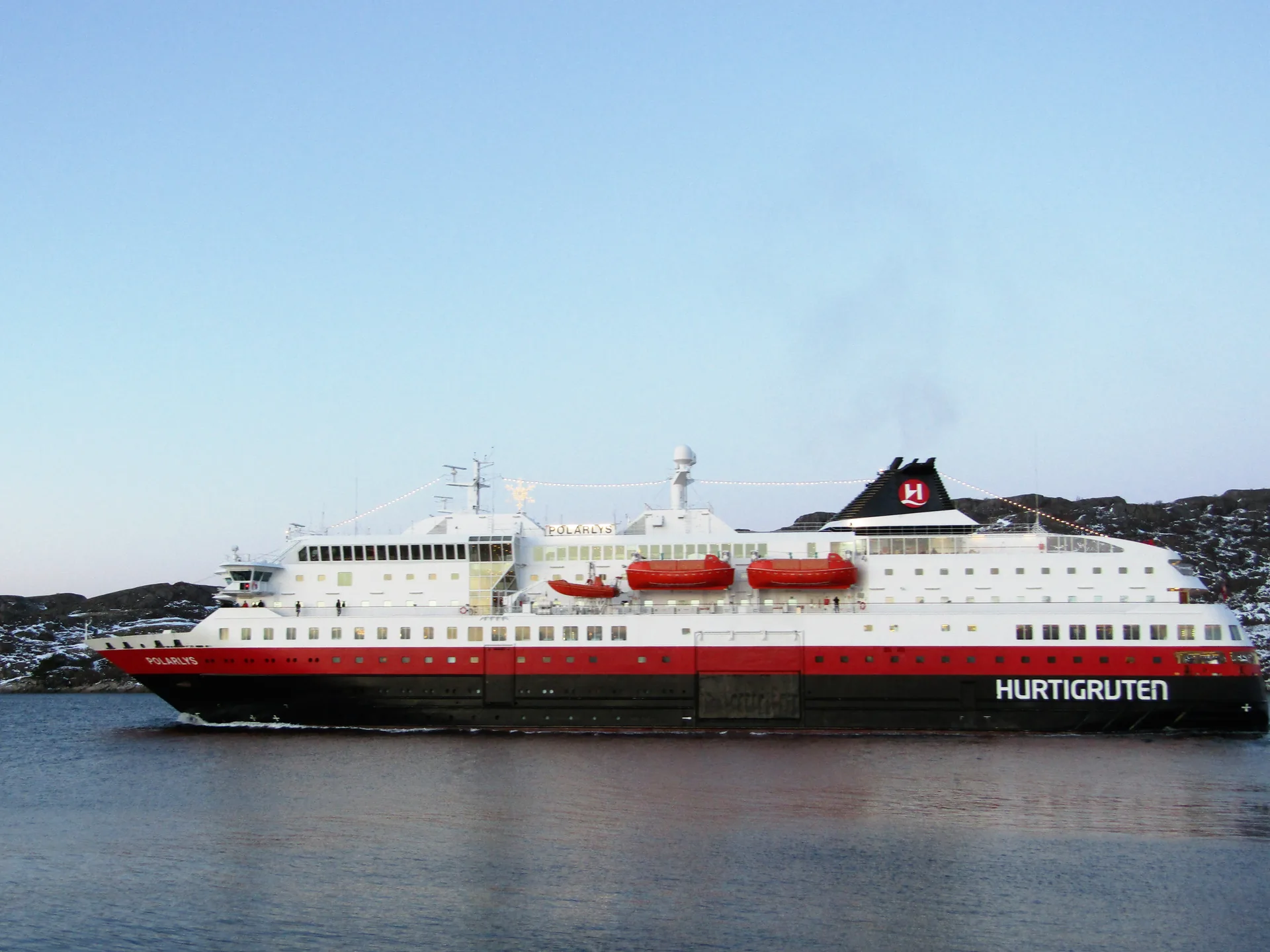
A red and black coastal express ship on fjord water, steep green rock and snow-covered peaks behind it

Norway

Hurtigruten Coastal RouteThe hull runs close to the rock, snow on both sides

On 2 July 1893 the first ship left Trondheim and reached Hammerfest sixty-seven hours later.

The coastal route between Bergen and Kirkenes, along the western and northern edge of Norway.

PlaceNorway
TypeCoastal express route
ScheduleDaily, year round

A route that has run for 133 years

Norway — Coastal express route.

In 1893 the Norwegian government let a contract to link the coast by sea. Vesteraalen sailed from Trondheim on 2 July, calling at Rørvik, Brønnøysund, Sandnessjøen, Bodø, Svolvær, Lødingen, Harstad, Tromsø and Skjervøy, and reached Hammerfest sixty-seven hours later. It was the fastest way between north and south at the time, which is where the name comes from: hurtigruten, the express route.

Today the northbound sailing calls at 34 ports and the southbound at 33, every day of the year. Keeping that schedule takes eleven ships: seven run by Hurtigruten AS and four by Havila Kystruten, the two companies alternating departure days.

It was never only a tourist line. Passenger and cargo traffic along the coast still depends on it, and the ship keeps calling at the small ports, taking people and goods on and off.
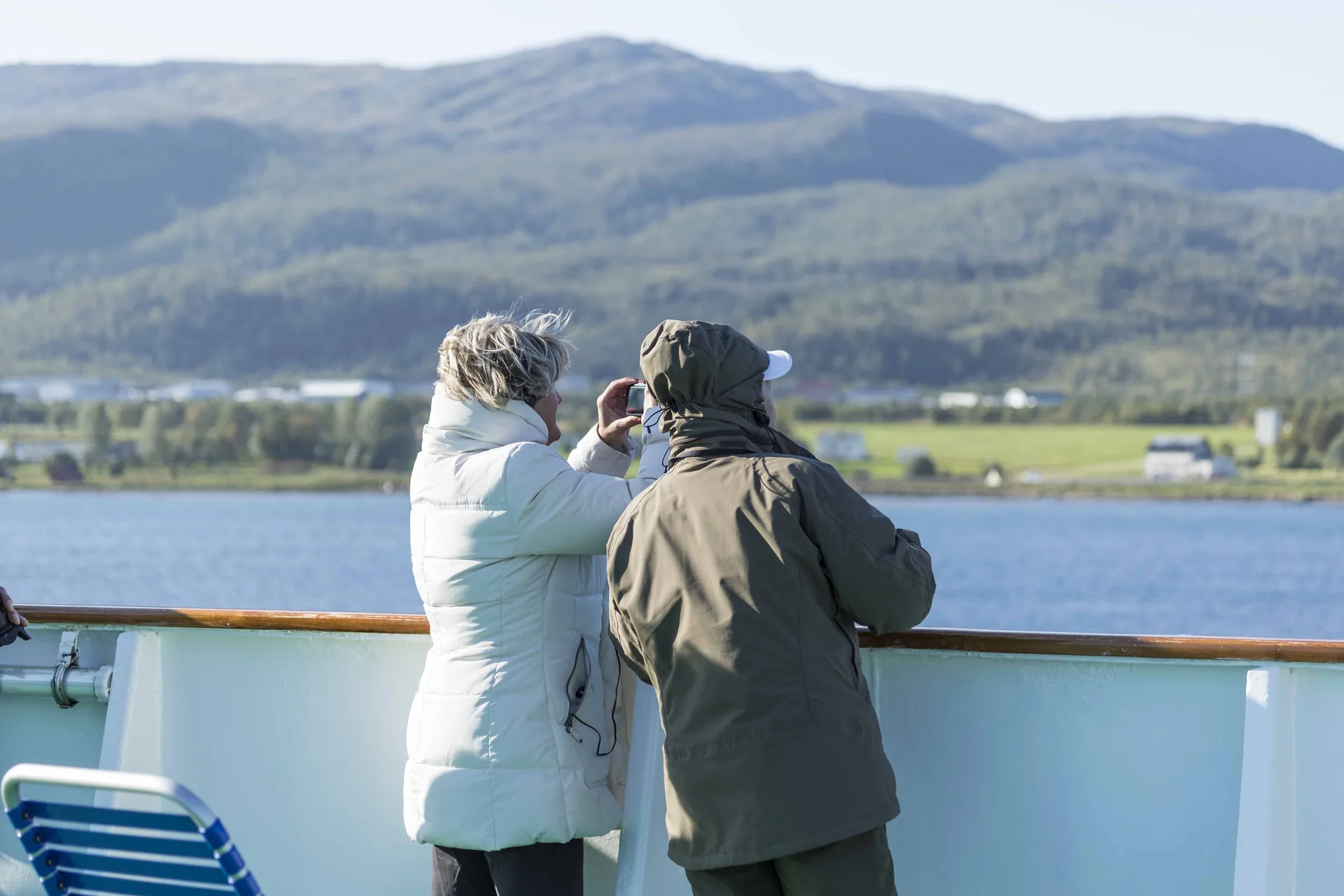
Two passengers in pale jackets standing at the deck rail, looking out at the fjord and the mountains ahead
Two people at the rail
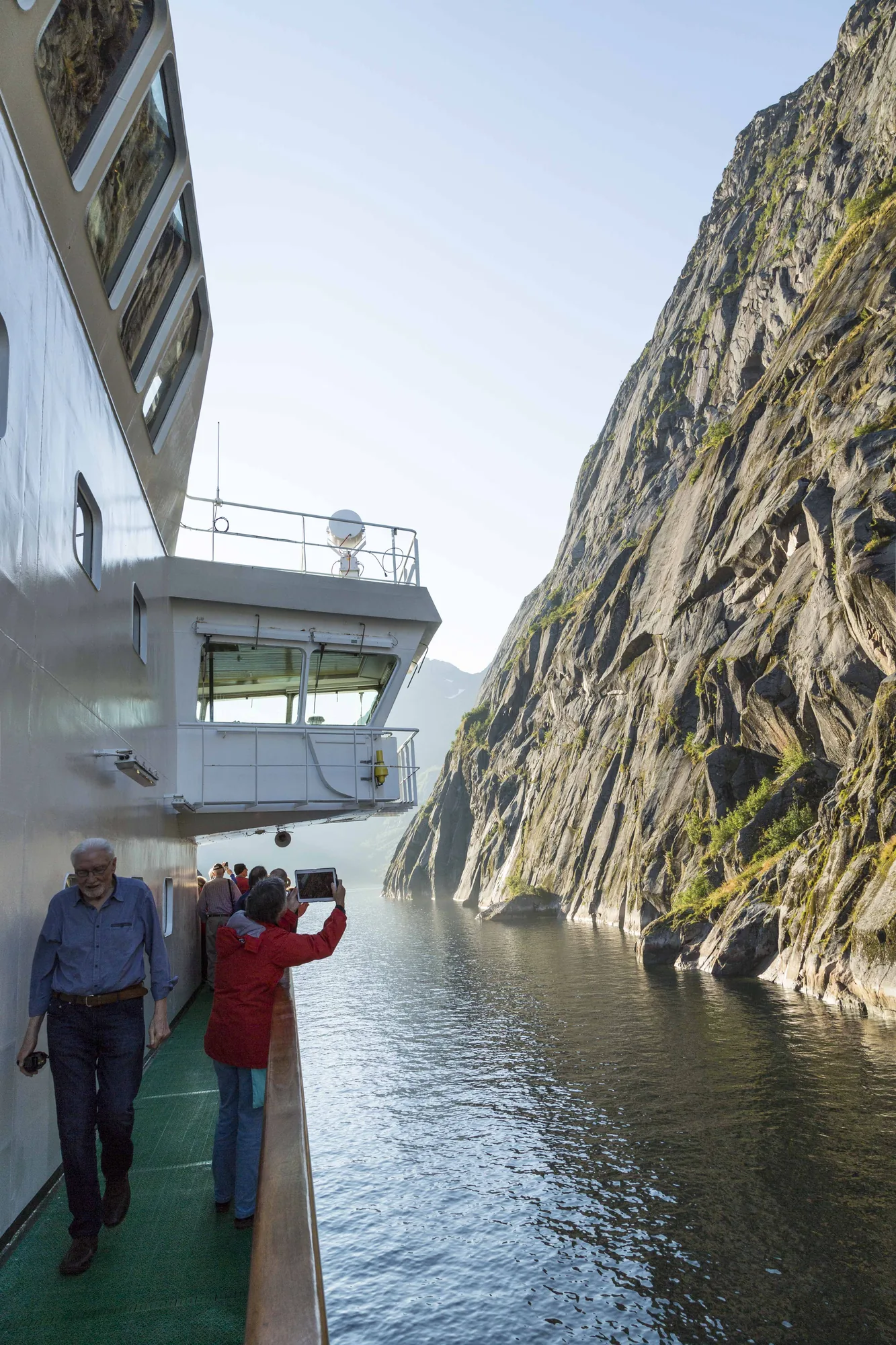
The side deck of the ship close against a narrow fjord wall with grass on the rock, the water narrowing at the hull
Rock close to the hull
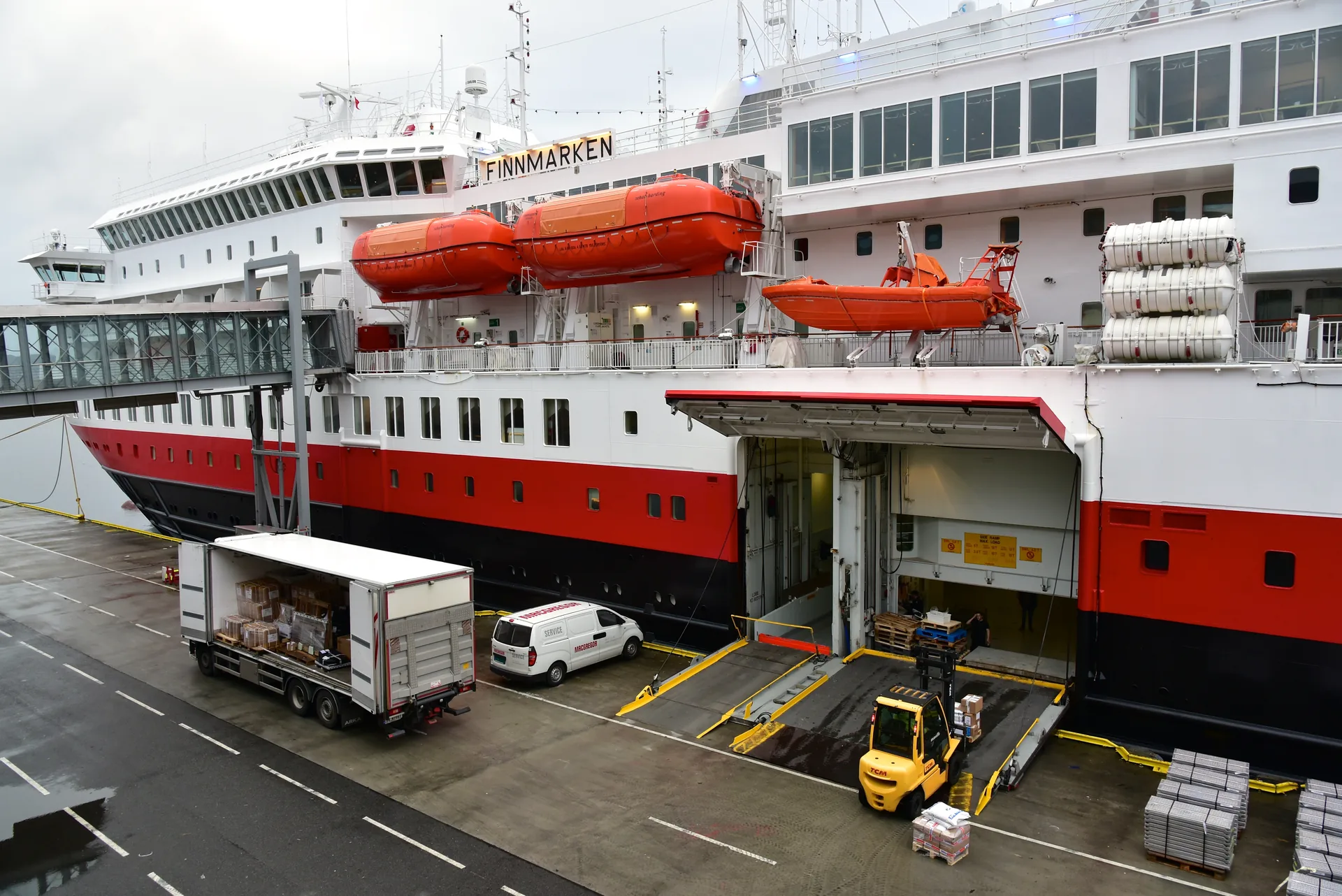
The ship alongside a quay with the side door down, lorries and cargo on the dock, town and mountain behind

The ten minutes alongside

The hull settles against the quay, the side door comes down, a lorry reverses aboard and crates go out one at a time. Passengers stand on the dock, look at the town, and get back on.

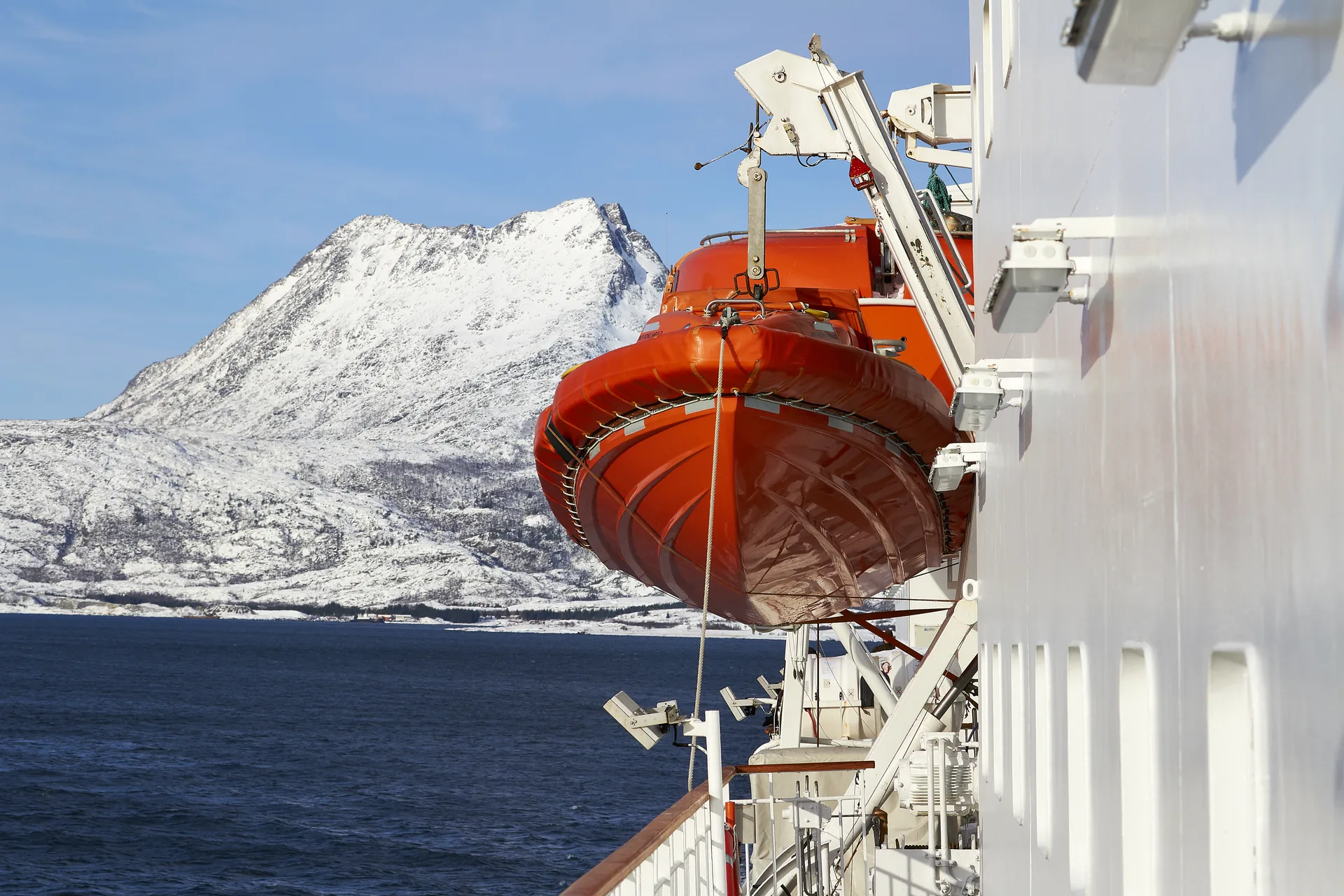
A winter deck with a thin layer of snow, an orange lifeboat on its davits, snow-covered rock and black water beyond the rail

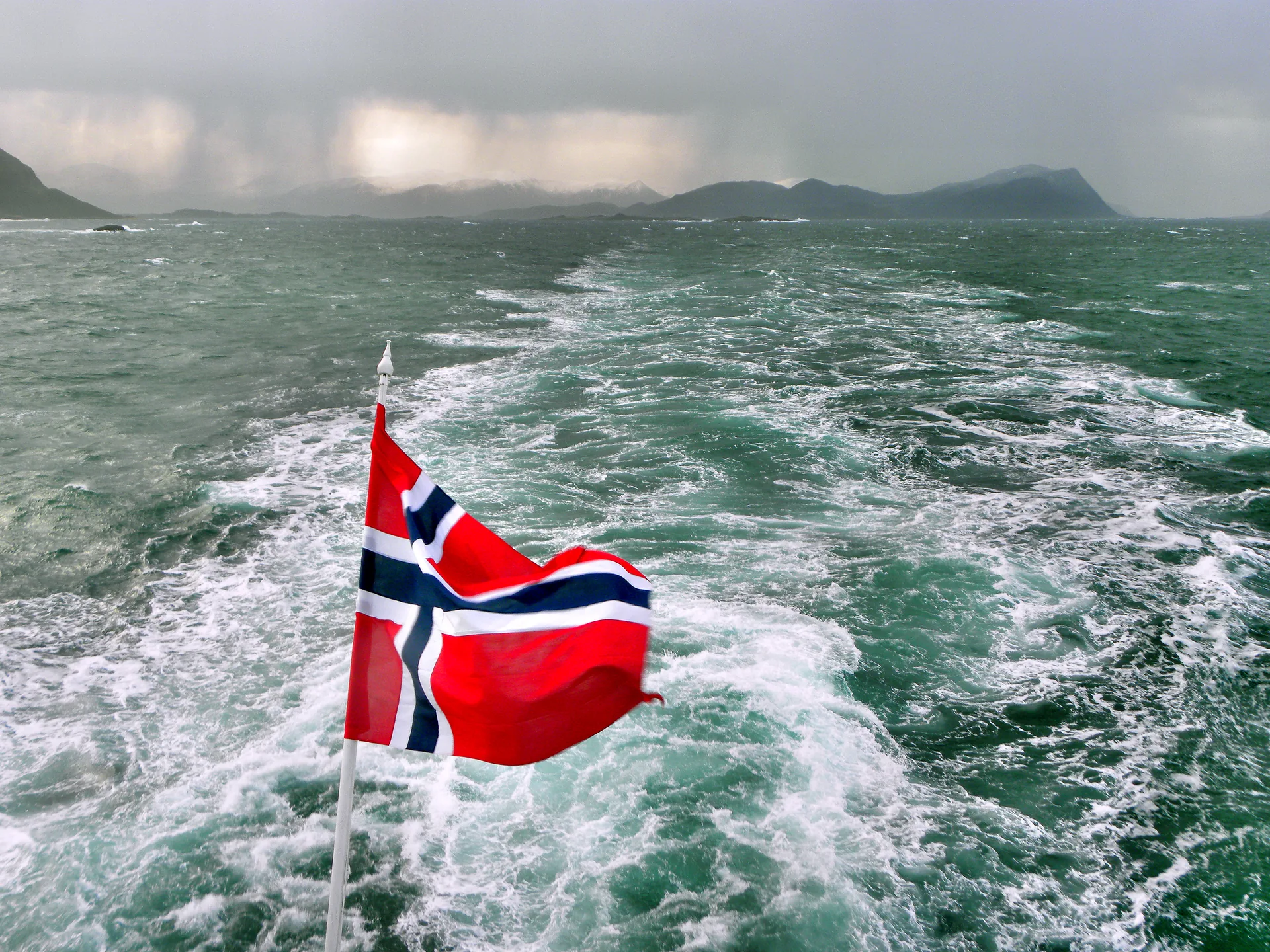
The flag never stops

Two white lines of wake trail behind the stern, and the Norwegian flag stands straight out from its pole. The ship does not stop, so neither does the flag.

Two white wakes trailing behind the stern, the Norwegian flag standing straight out from its pole

It runs in winter too

A thin sheet of ice on the deck, black water and snow-covered rock beyond the rail. Stand there a few minutes and the wind sends you back inside.

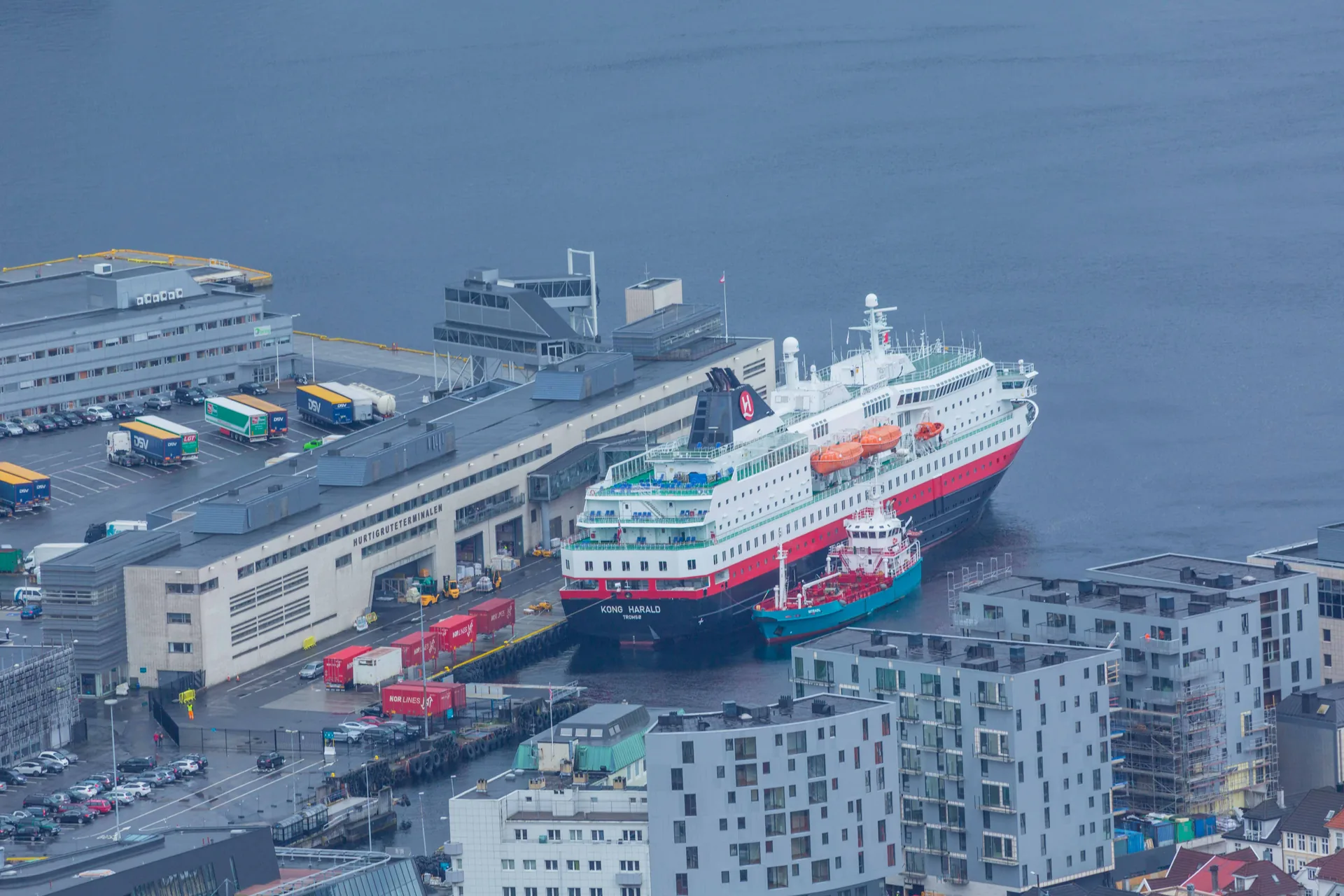
A high view of Bergen harbour with the ship at the quay and rows of coloured roofs behind
Route

Board in Bergen

Bergen is the southern end, with the quay at the edge of the harbour; Kirkenes is the northern one, and Trondheim, Bodø and Tromsø all work as places to join or leave.

It started with a contract

Before 1893 the north and south of Norway were joined by road and by irregular sailings, and winter made both worse. The government let a contract for a fixed service, and Vesteraalen left Trondheim on 2 July 1893 bound for Hammerfest.

That first run reached Svolvær at eight in the evening on 3 July after thirty-five and a half hours, and Hammerfest on 5 July after sixty-seven. It was the fastest link between north and south, and the route took its name from that: the express route.

How it runs now

The northbound sailing calls at 34 ports, the southbound at 33. Holding a daily departure in both directions takes eleven ships: seven with Hurtigruten AS and four with Havila Kystruten, alternating days.

It runs 365 days a year, winter included. In June 2011 the full voyage of MS Nordnorge from Bergen to Kirkenes was broadcast continuously for 134 hours.

Also worth knowing

Where to join, who is sailing, and what winter does to the schedule.

01

The two ends

Bergen in the south, Kirkenes in the north. Trondheim, Bodø and Tromsø all allow a shorter segment rather than the full run.

02

Two operators

Hurtigruten AS and Havila Kystruten alternate departure days, so only one sails on a given date. Check the ship name before planning around a timetable.

03

Year-round

The route runs every day of the year, with no seasonal shutdown. Sea conditions in winter differ from summer, so leave room in the itinerary.

04

Time alongside

The larger ports allow a walk ashore; the small ones give ten or fifteen minutes. Read the day's port list before deciding to get off.

05

On deck

Wind is constant and winter decks ice over. Windproof layers and soles with grip are the practical answer.

06

The name

Hurtigruten means the express route, from the 1893 service that was far quicker than the road.

Putting the voyage into a trip

Choose the direction first, since the port count differs, then check which company sails on your date.

Cuisine

Meals on board and food ashore at the ports; the arrangement should be confirmed with the operator.

Booking

Sold by voyage on the official site. The two companies alternate days, so only one sails on any given date.

Hours

365 days a year, with one northbound and one southbound departure daily.

Dress and diet

No dress code is listed. The deck is windy and ices over in winter, so windproof layers and gripped soles matter.

Plan this into a journey

Tell us which end you would board from and how many days you have, and we can talk through how the sailing fits.

1stlandinglink@gmail.com

Read this page in Chinese

Discuss this journey